

Insights
5
min read
Beyond Connectivity: How Telcos Can Turn Security into Enterprise Growth
If you run a telecom business, you have likely watched your core enterprise revenue flatten out over the last few years. Standard connectivity, the high-speed fiber lines and mobile fleets that used to drive healthy profits, has turned into a basic utility. B2B clients expect lightning-fast speeds and reliable uptime, but they treat it as the baseline. Worst of all, they want to pay less for it every single year.
At the same time, your business clients are facing a massive problem. Their employees are working from everywhere, their files are spread across multiple clouds, and digital threats are at an all-time high. Keeping company data safe has become a daily headache for every CEO, business owner, and IT manager you talk to.
This is where your biggest growth opportunity lies. You are no longer just delivering raw bandwidth. You hold the physical networks, regional data centers, and trusted infrastructure that every byte of enterprise data flows through.
By embedding security directly into your core network, you can step out of the commodity trap. Data protection becomes your most lucrative enterprise product, turning standard connectivity into a high-margin growth engine.
Why Business Clients Want Security Directly From You
For years, telecom companies played a passive role in security. You provided the internet connection, and your business clients went out to buy separate antivirus software, firewalls, and security apps from third-party vendors.
When something went wrong, the client had to figure out who to call. Was it an internet outage? A software glitch? A cyberattack? Enterprise IT teams are exhausted. They do not want to manage twelve different vendor portals, dozens of SaaS subscriptions, and complex API integrations.
Today, smart telecom providers are changing the game. Businesses want simplicity. They do not want to manage ten different security tools or train their teams on complex software. According to industry research from GSMA Intelligence, operators can address nearly $1 trillion in enterprise tech spending by bundling security and cloud solutions directly into their connectivity offerings.
When you embed security into the network connection itself, such as Secure Access Service Edge (SASE), Security Operations Center (SOC) management, and Zero Trust Network Access (ZTNA), as a single service, you take the pain of managing dozens of different security tools away. Data protection becomes your most lucrative enterprise product, turning standard connectivity into a high-margin growth engine.
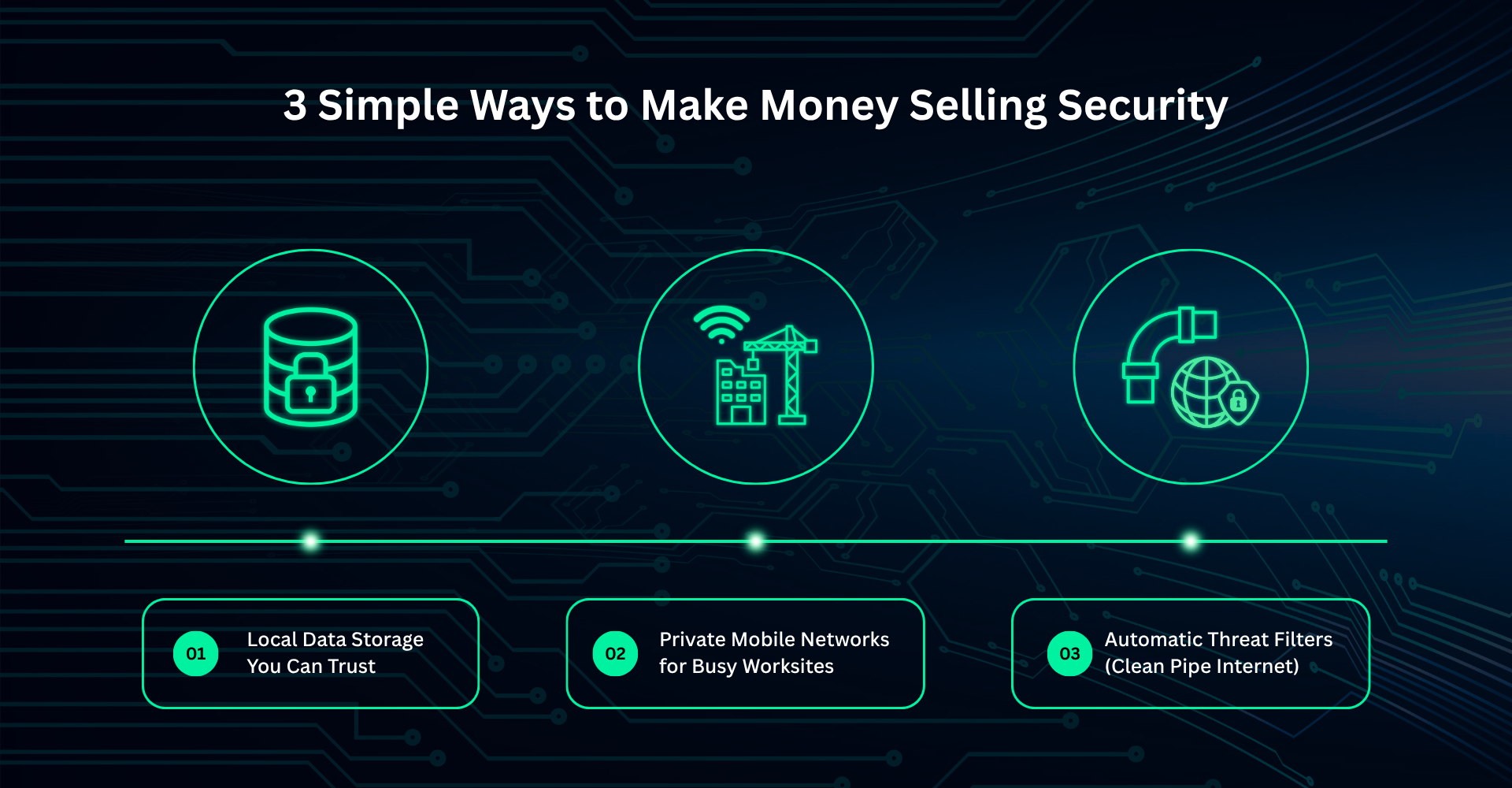
3 Simple Ways to Make Money Selling Security
You do not need to turn into a full-blown software company overnight to profit from security. You just need to focus on three simple services that leverage the network you already own.
1. Local Data Storage You Can Trust
Global cloud providers offer scale, but they often struggle with local data compliance. Governments and regulated industries, like healthcare, finance, and defense, increasingly demand that their data remain strictly within physical national borders.
Market data shows the global sovereign cloud market is surging, with projections pointing toward $195 billion as enterprise demand for data localization heats up.
Because your data centers and network exchanges are natively local, you can offer true Sovereign Cloud as a Service. You are not just storing client data; you are guaranteeing that it never leaves the country, satisfying strict regulatory mandates and giving you an edge over global hyperscalers.
2. Private Mobile Networks for Busy Worksites
Hospitals, factories, shipping ports, and warehouses rely on hundreds of connected devices and mobile teams. Standard Wi-Fi is notoriously spotty and easy to hack across large physical areas.
By offering these businesses their own Private 5G Network, you give them a private, ultra-secure wireless bubble. It works like an exclusive, high-powered internet connection that only their approved devices can join. It keeps their physical operations moving safely without relying on public internet.
3. Automatic Threat Filters (Clean Pipe Internet)
Most security tools try to block bad guys after a threat reaches a company's laptops or servers. Network-level security stops the threat while it is still traveling down the road.
Think of this like a water filtration system. Instead of giving your client a pitchfork to clean dirty water at their tap, you filter out the mud at the water plant before it ever reaches their office. Offering "clean pipe" internet lets you charge a monthly premium for automatically blocking viruses, spam, and overload attacks before they hit your client's devices.
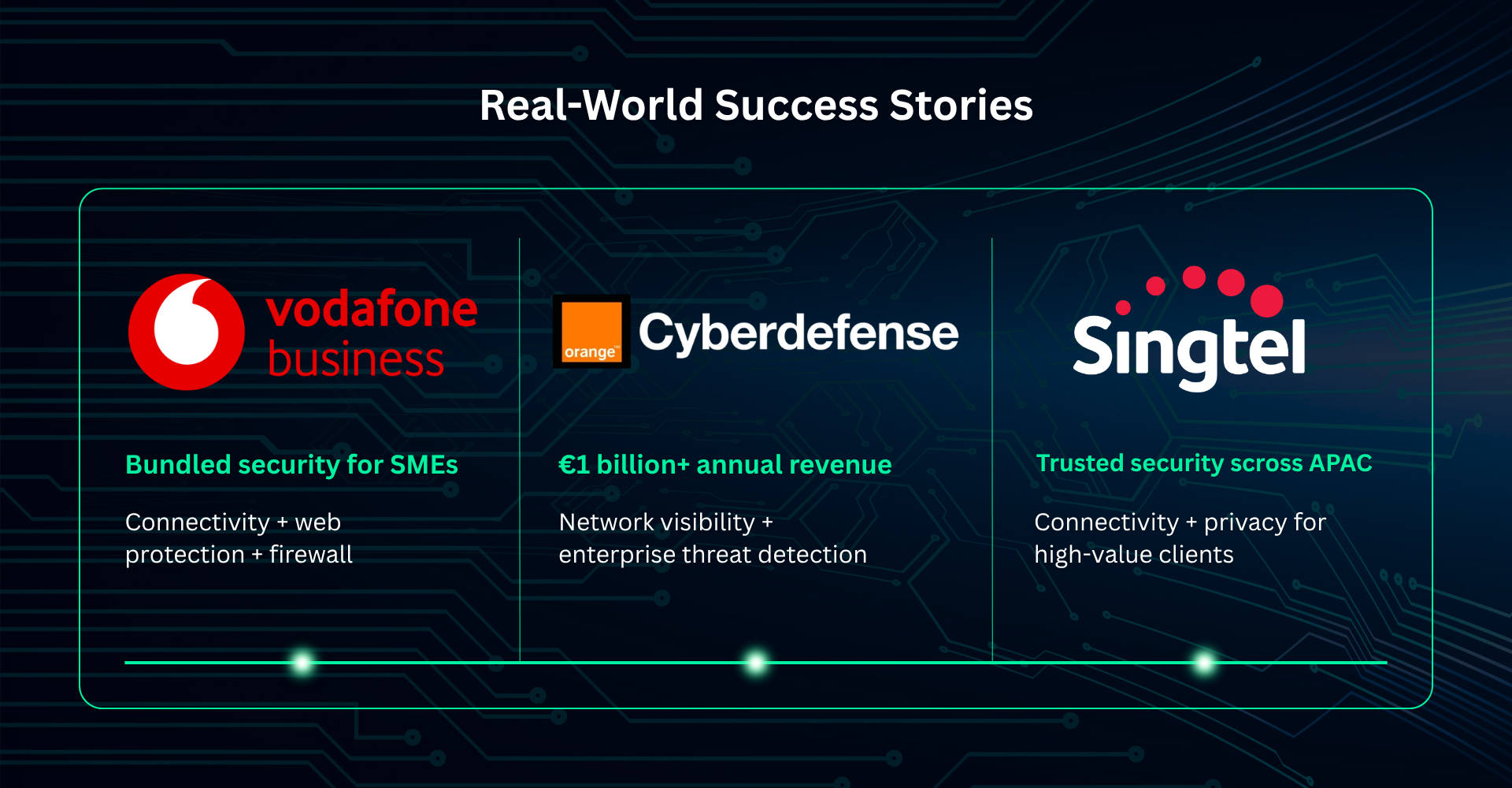
Real-World Success Stories
This is not just a theory. Telecom providers around the globe are already using this strategy to boost their revenue:
These companies succeeded because they stopped selling raw gigabytes and started selling safety and peace of mind.
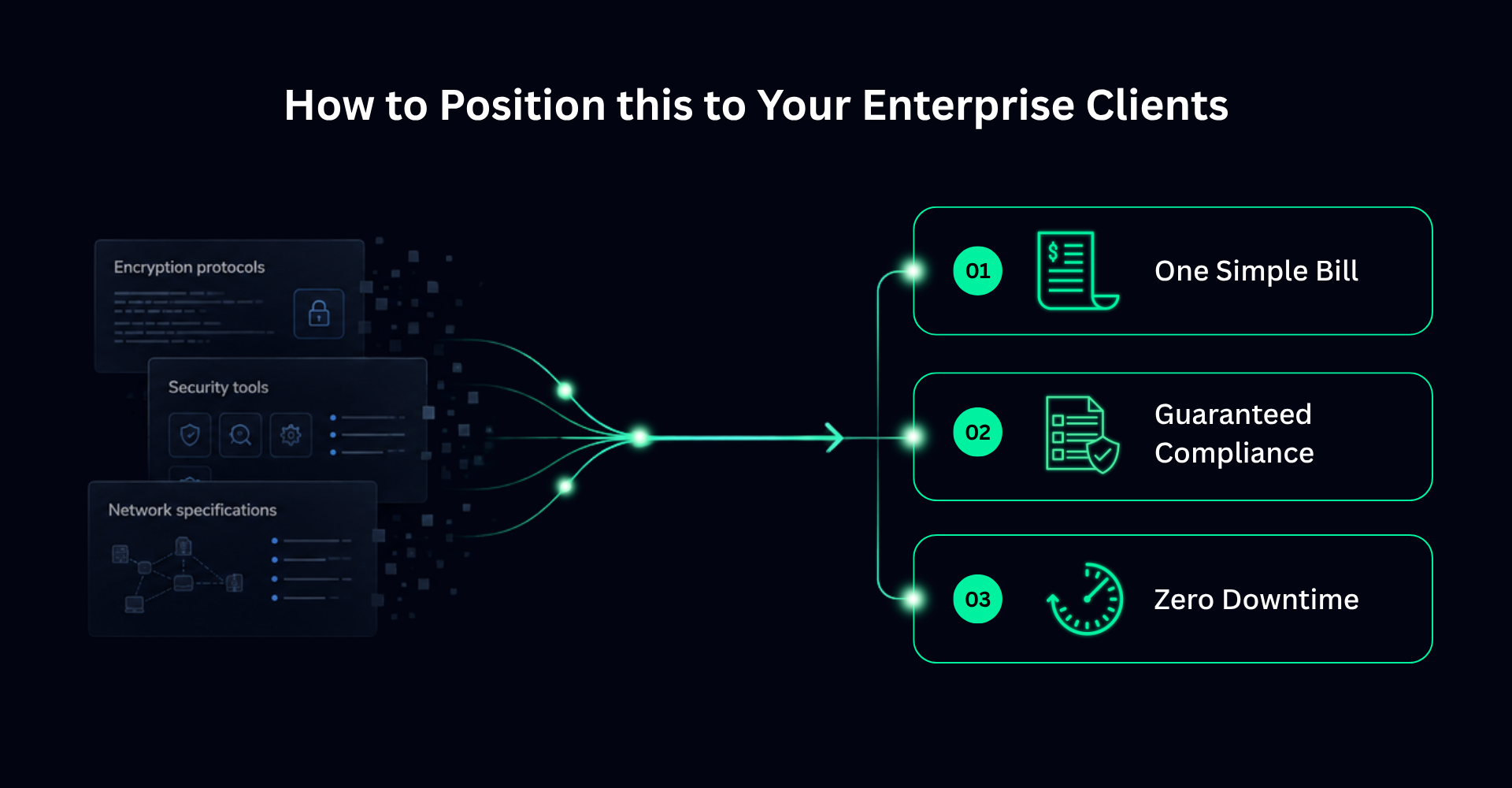
How to Position This to Your Enterprise Clients
When your sales teams speak to enterprise clients, they should avoid overwhelming them with technical jargon. Nobody buys a security solution because it uses a specific encryption protocol. They buy it because it protects their bottom line and saves time.
When positioning network-level security to your business clients, focus on three straightforward outcomes:
When you frame security around these outcomes, you take price off the table. You are no longer fighting over a few dollars per month. You are showing them how to protect their bottom line.
Turn Your Network into Your Best Sales Engine
Your physical network is the most critical digital asset in the modern enterprise economy. By embedding security directly into your core connectivity products, you can unlock entirely new enterprise revenue streams, improve customer retention, and position your brand as a trusted technology partner.
Transitioning your enterprise portfolio from basic connectivity to a high-margin, security-first offering requires the right platform, agile operations, and a clear go-to-market strategy.
Whether you want to launch managed SASE products, package private 5G networks, or simplify your enterprise billing and provisioning workflows, we are here to help you move fast.
Ready to scale your enterprise revenue and turn data protection into your biggest competitive advantage? Contact our expert team today or request a personalized platform demo to see how we can help you build, launch, and monetize next-generation telecom services.