

Insights
7
5
min read
Telco AI Readiness: Readiness Data Helps Manage Digital Transformation Risks
Telcos Know They Need to Modernize. The Real Barrier Is Risk.
Despite most of the telco industry actively adopting AI, around one in four telcos are still in the assessment and piloting phase.
In 2025 specifically, 28 percent of telco respondents were assessing and piloting AI, while 65 percent of telcos reported they were actively using AI.1
This suggests that a meaningful minority of telcos are still interested in AI but are proceeding carefully as they assess the risks of upgrading software and architecture. One possible reason is risk sensitivity: telco leaders know they will be accountable if a software migration disrupts live services.
Circles’ telco AI-readiness whitepaper highlights how large-scale migration failures can affect every part of the business, such as service disruptions and billing failures caused by poorly migrated customer data, can frustrate both customers and finance teams. This in turn can result in revenue leakage and reputational damage, turning a technology project into an enterprise-level problem.
While this caution is understandable, there is still the risk of getting left behind as the rest of the industry charges ahead.
While Legacy Systems “Still Work,” They Could Create a False Sense of Safety
Telcos that have not modernized often rely on systems built across multiple layers of customized software from multiple vendors. In some cases, these environments often rely on a complex patchwork of custom Extract-Transform-Load integrations built for specific use cases or data silos that prevent information from being used across the organization. However, as some of these systems “still work,” some telco leaders refuse to take the risk of upgrading their software and digital infrastructure.

However, “still works” may not mean that these systems are AI-ready. Many high-value AI use cases, such as agentic AI workflows, depend on accessing real-time data and coordinating workflows across multiple domains and systems. Without the ability to act across commercial, operational, technical, and customer-facing functions due to fragmented telco systems, AI can only help within narrow workflows.
Some telcos have also considered using stack-agnostic AI overlays, which are wrapped around their legacy systems. However, one limitation is that these overlays still depend on the quality of the systems of record and the integrations connecting them. If the data quality and integration quality are poor, telcos could benefit from isolated AI gains but cannot consistently coordinate organization-wide AI value.
A useful way of viewing this situation is looking to understand which existing systems are preventing the organization from unlocking AI’s value and what the long-term costs are if those bottlenecks remain unresolved. AI can help operators reduce service costs and downtime while improving productivity, but only when paired with deeper structural moves such as product simplification, legacy shutdowns, and vendor consolidation.2 Adding overlays without upgrading core systems can provide quick wins but could add to technical debt.
Readiness Data Gives Leaders a Safer Way to Start
Effective modernization strategies start with a holistic view of the telco’s current technology, operating model, and organizational readiness before deciding on a transformation path. Identifying which parts of their organization or tech stack need to be wrapped, modernized, or replaced helps telcos prioritize their changes and manage risks at each step.
Telco leaders can uncover which legacy stack is setting a hard ceiling on growth, customer experience, or operational agility, which workflows can be improved through targeted fixes, and where phased modernization makes sense.
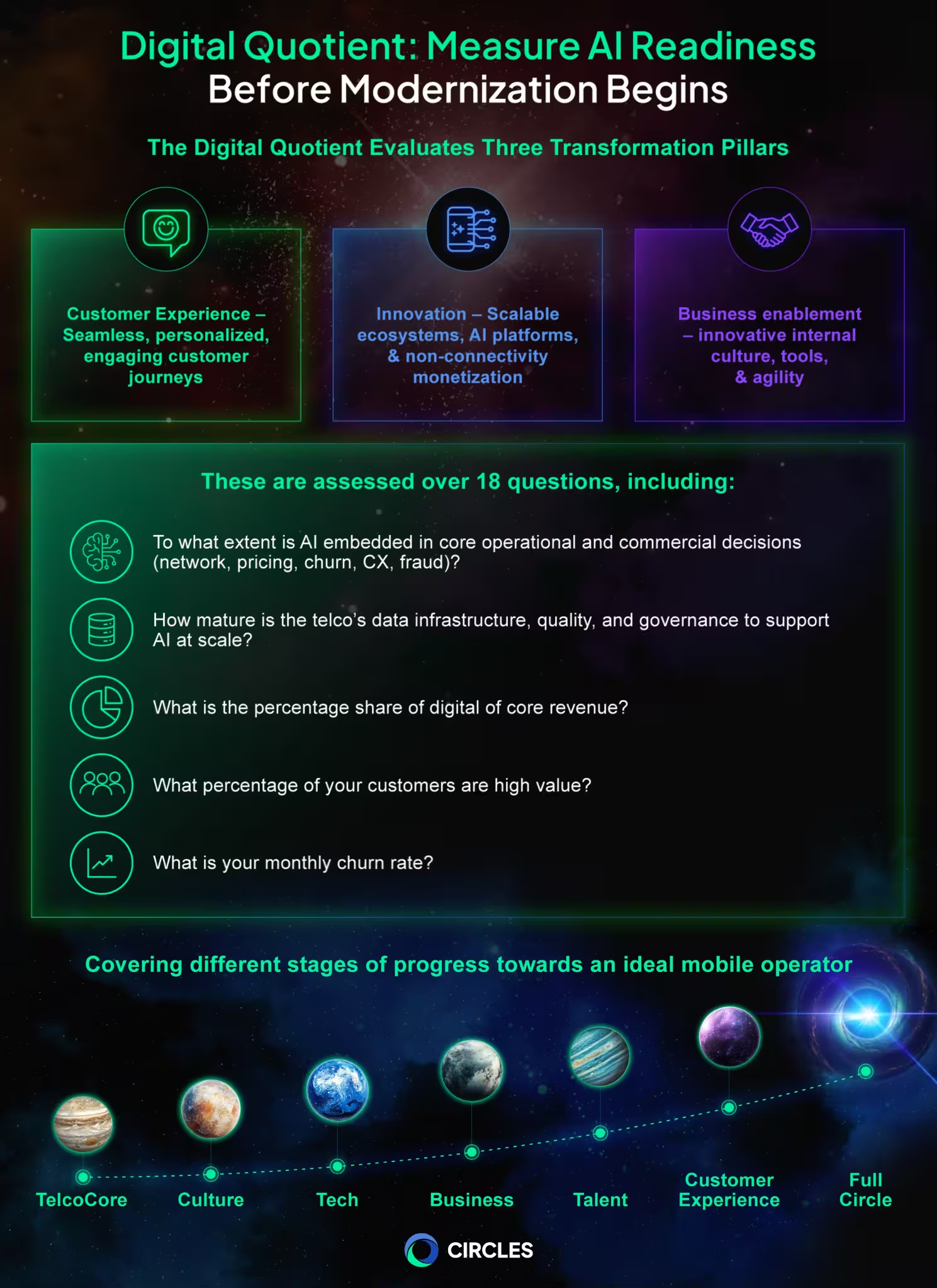
AI readiness data becomes valuable when building these plans. Circles’ Digital Quotient is designed to help telcos determine whether they have the commercial, operational, technical, and customer-facing foundation needed to move toward an AI-native model.
The Digital Quotient assessment uses 18 questions across areas, including digital revenue share, product launch speed, and data infrastructure quality, to provide a clearer baseline before leaders choose a modernization path. Below is a sample of some of these questions:
These questions help provide a baseline for a telco’s transformation, helping to highlight planning gaps, informing investment and transformation priorities, and aiding in change management plans.
The Next Step in Readiness: What Telcos Need From Modernization Partners
While high-quality readiness data helps telco leaders plan their telco’s transformation priorities, larger-scale modernization requires partners with equally strong proof points. When looking for these partners, it helps for telcos to demand evidence of successful delivery, such as:
These are four of the six checklist items. The full checklist is available in Circles’ AI Readiness White Paper.
Modernization partners who meet these six criteria are well equipped to explain what a telco’s future architecture should look like. They can also demonstrate how the telco can safely modernize without putting live customers, revenue, or core operations at unnecessary risk.
In terms of reference deployments at a comparable scale, these can include migrations such as KDDI’s povo, which gained over one million subscribers in its first year and achieved NPS scores more than 50 points above industry averages, and Telkomsel’s by.U migration of 20 million customers to a full-stack platform in a live environment without service disruption.
In summary, telco AI transformation needs both a well-thought-out transformation plan based on tangible AI readiness data as well as reliable modernization partners with proven track records.
Measure Readiness Before Modernization Begins
As responsible stewards for their telcos, effective telco leaders weigh the best transformation paths after understanding the risks but also understand the opportunity cost of getting left behind.
While the risk of moving is visible, the risk of staying is quieter but compounds over time. If technical debt is left unaddressed, telcos could face slower launches, weaker AI value, and reduced commercial agility.
The best telco leaders know they need to step forward, and they do so based on a clear baseline built with reliable readiness data.
Take the first step in getting this data by downloading The AI Readiness Gap in Telecom to understand how telco leaders can evaluate their AI readiness before deciding their next transformation steps. Then use Circles’ Digital Quotient Assessment to identify where your organization is ready, where gaps remain, and which modernization path deserves deeper evaluation.