

Insights
7
5
min read
Telco App Monetization: How to Move From Bill Payments to Non-Connectivity Revenue
With slowing connectivity growth and increasingly uncertain market conditions, telcos have been searching for newer sources of non-connectivity revenue, including through telco apps and loyalty programs. The telco market is estimated to rise from US$1.19 trillion in 2025 to US$1.36 trillion in 2030 with a CAGR of 2.7 percent. Meanwhile, the mobile industry’s CAPEX is expected to rise to US$1.2 trillion across 2025 to 2030.1
Today, most telcos have apps that subscribers use to manage their accounts, and high-profile brands have been expanding their app capabilities to include loyalty programs like T-Mobile’s T-Life, O2’s Priority, and Verizon’s myAccess. This approach still has room to grow as there is still a large population of app users who are not using these telco apps outside of managing their accounts and aren’t enrolled in telco loyalty programs, making them a potential growth opportunity.
This highlights an opportunity for telcos: finding new ways to evolve their telco apps beyond account management tools and loyalty interfaces and turn into commercial growth channels.
The Market Has Validated App Engagement, But the Next Battleground is App Economics
A recent study across 31 markets showed that telcos have a wide captured app user base. In the study, 81 percent of customers use their provider’s mobile app and 52 percent engage with it weekly.2 However, 48 percent of users only use the app for administrative tasks, showing that there is potentially room for telcos to improve their app engagement rates and eventually monetize these users.
Leading telcos are already making headway in improving app engagement. T-Life, Priority, myAccess, Globe Rewards are examples of telco loyalty programs to keep their users engaged. T-Mobile’s T-Life all-in-one app includes account management, telco plan upgrades, and loyalty perks access including T-Mobile Tuesdays.3
While longer running loyalty programs likely have proven business outcomes, there is still room for telcos to use app engagement to further change customer behaviour and start directly generating revenue.
Sharpening Focus on App Monetization
Successful app monetization projects need to plan for app engagement, customer value, and ensuring profitable operator economics to reinforce each other.
Before engagement can be monetized, telcos need to give customers a good reason outside of managing their accounts to engage with the telco app. Highly engaged telco loyalty programs, like the aforementioned T-Life, have successfully incorporated popular loyalty programs into their one-stop app. Globe Rewards in the Philippines provides customer value by enabling users to use loyalty points to offset monthly utility bills.4 Both of these provide valuable reasons for the customer to engage with their telco apps.
But these also need to be paired with ensuring that the app monetization program is profitable. For example, if partner offers are involved in the loyalty program, there needs to be a clear plan of how these offers contribute to the telco’s bottom line. Telcos should ask a few key questions when planning their next app monetization project:
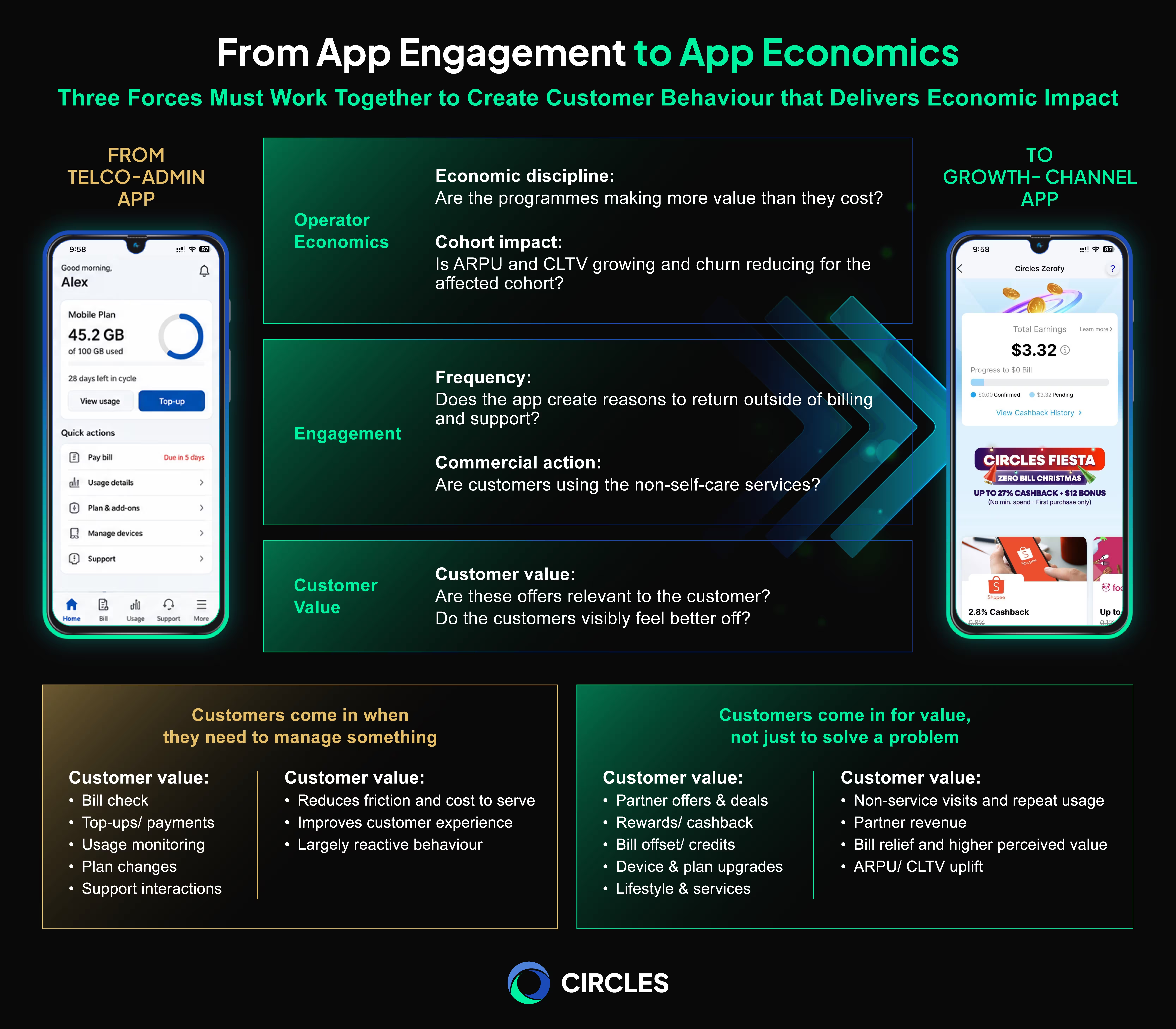
With declining connectivity revenues, app monetization plans need to tighten the loop between app engagement, customer value, and economic value. But telcos also need to be careful when planning their loyalty programs or app monetization plans. While top-performing loyalty programs can increase revenue from customers who redeem points by 15 to 25 percent annually, around two-thirds of established loyalty programs fail to deliver value, with many eroding value.5
But with proper planning, higher customer value should result in better app engagement, which results in improvements to the bottom line. On top of gaining a potential customer lifetime value uplift through loyalty,2 successful app monetization also gives telcos the lifeline they need to bolster slowing connectivity growth.
One promising app monetization project that provides customer value, app engagement, and app economics is a partner-based loyalty cashback marketplace that lets customers use their rewards points to offset their bills while providing commercial value to the telco.
What ZerofyX Adds: A Direct Line From Everyday Spending to Telco Value
Circles.Life launched its loyalty cashback marketplace, ZerofyX, in Singapore. ZerofyX allows loyalty program members to turn spending on partner offers into cashback value that can be applied to their mobile bill, telco services, devices, or other loyalty rewards. This Spend, Earn, and Zerofy flywheel tightens the loop between customer value, engagement and economics.
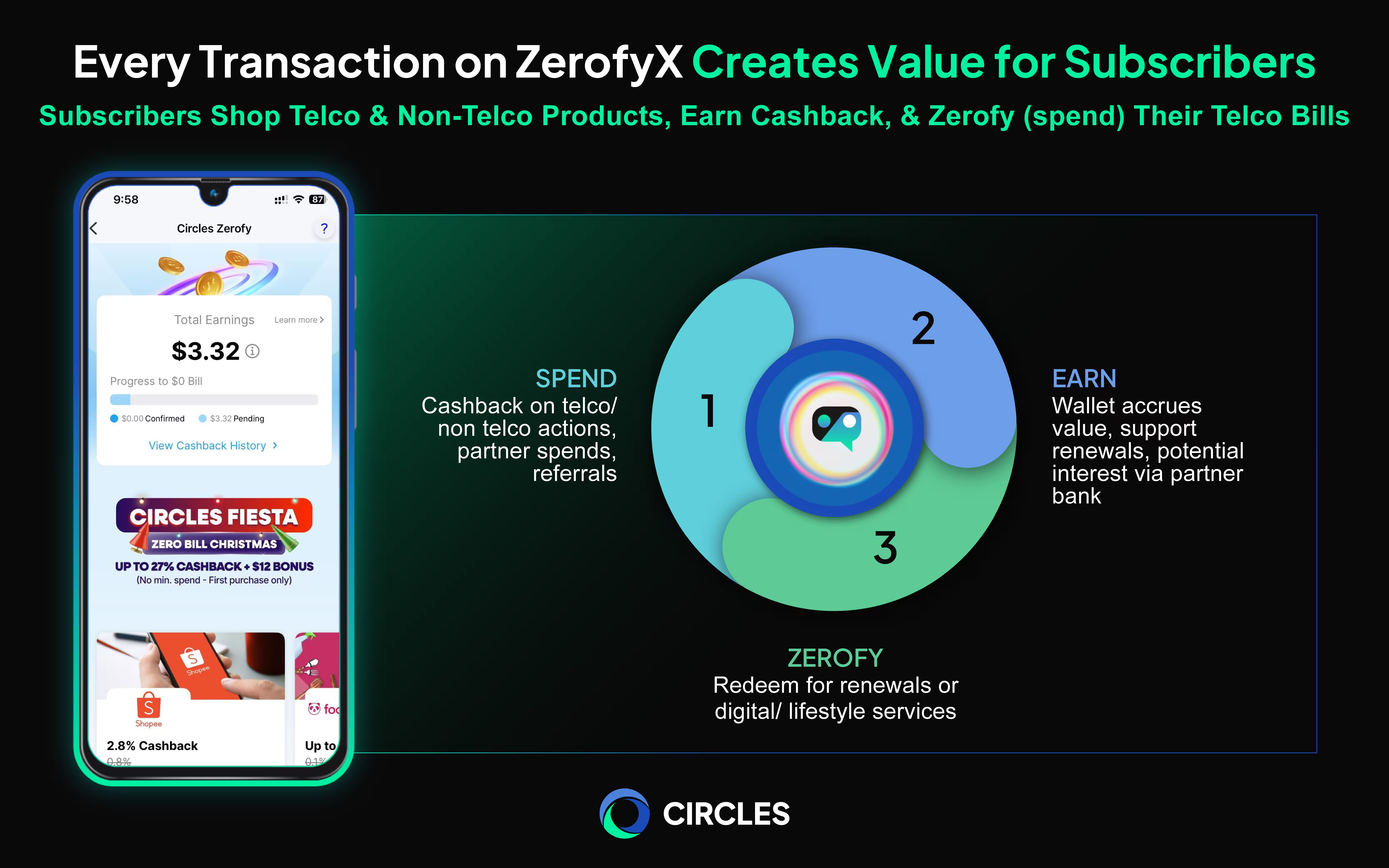
Customer value is provided through customers working towards zerofy-ing their mobile bills. Looking for new partner offers and logging in to check their progress towards offsetting their bills gives customers a new, non-administrative, reason to engage with the app. Finally, customer spending on partner rewards gives the telco direct commercial value.
In terms of frequency, customer value, and commercial action, this program saw hundreds of thousands in Singapore dollars in gross merchandise value in 2 months. In terms of cohort impact, ZerofyX users saw major increases in NPS scores.
On top of those results, ZerofyX also provides telcos with the following business-centric KPIs to track: partner offer activation, cashback redemption, bill-offset engagement, repeat visits, marketplace revenue, and cohort-level retention or ARPU movement.
With this, telco apps can go beyond just managing telco accounts to becoming a platform where app engagement rewards both customers and telcos with value.
Moving From App Engagement to App Economics
Telcos have already recognized the app engagement opportunity. The evidence is in the market: all-in-one service apps, rewards apps, partner perks, priority access, app-based offers, and lifestyle benefits are now part of the operator playbook.
But the next phase is to turn this captured market into a growth engine: one that creates customer value, partner revenue, lower churn risk, and growth beyond connectivity.
That is where the conversation must move next: from loyalty activity to loyalty economics.
Explore how ZerofyX helps operators turn app engagement into partner revenue, bill relief, and measurable customer value.
References:
- GSMA - The Mobile Economy 2026
- Simon-Kucher - Turning engagement into tangible customer value: Insights from the Global Telecommunications Study 2025
- NASDAQ - T-Mobile US (TMUS) Q4 2024 Earnings Call Transcript
- Globe Rewards 2026: Turning Every Point into Everyday Benefits
- Next in loyalty: Eight levers to turn customers into fans | McKinsey