

Insights
5
5
min read
Telecom AI Readiness: Why Telco AI Pilots Stall Before They Scale
And the Importance of a Telco’s Digital Quotient
Across the telecommunications industry, AI adoption is accelerating across multiple domains, from network automation and customer service and experience optimization to internal process optimization. In a recent telco AI survey, 90 percent of respondents reported that AI is helping increase annual revenue and reduce costs, and 89 percent of telecom operators plan to increase AI spending in 2026.1
While this should be good news, a harder question facing telco management teams today is whether AI adoption is translating into value at scale.
The Bigger Question: What is the Scale of AI’s Positive Impact?
AI can work well inside isolated workflows. For example, chatbots can improve customer response rates while marketing campaign engines can personalize offers and automate digital marketing campaigns. But without broader implementation, these efforts may not be able to scale value across the entire telco.
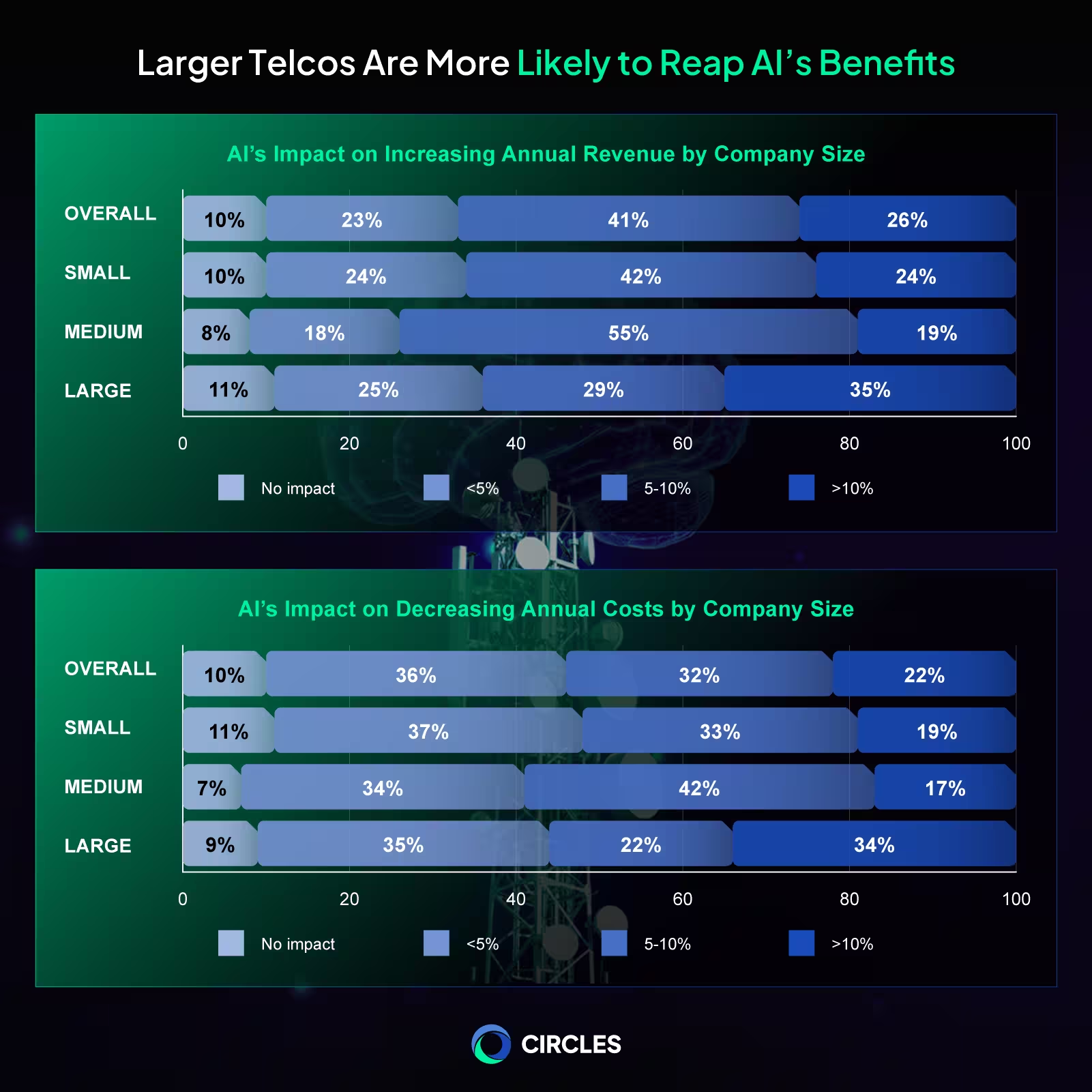
When it comes to the scale of AI’s value to telcos, larger telcos are more likely to see improvements of more than 10 percent in terms of cost savings and improvements to annual revenue compared to the overall average.1 At first, this could be a question of a telco’s size and its access to resources, but a deeper look at their initiatives provides an insight that smaller telcos can use as well.
Implementing Organization-wide Transformation Plans Can Cater to Multiple Key AI Transformation Pillars
Many tier-1 telcos are investing in comprehensive multi-year AI transformation programs for their telcos:
These comprehensive transformation plans are a likely contributor to why larger telcos are more likely to see greater cost decreases and revenue increases compared to smaller telcos, as these plans solve multiple issues, from data readiness to barriers to adoption from the organization itself.
A Telco Foundation That Isn’t AI-Ready Cannot Unlock AI Value At Scale
54 percent of telcos cite data-related issues as their biggest barriers to achieving AI goals, up 34 percentage points from the previous year.1 The global telco alliance, TM Forum, has also warned that telcos cannot deploy GenAI at scale without improving access to data across the organization and reported that only 6% rated their ability to use unstructured data as excellent in their Generative AI survey analysis.6 However, a lack of data readiness is only part of the issue.
Alongside data readiness, the top three AI challenges facing telcos include:1

Improving a telco’s AI readiness requires a comprehensive, organization-wide transformation. These transformation pillars can include but may not be limited to:7
- Technology understanding and maturity
- Organization, responsibilities, and skills
- Data readiness and availability
- Governance, privacy, compliance, and security
- Business objectives
- Taking AI use cases into production
Comprehensive, organization-wide transformation plans can tackle these challenges in a holistic way, from data readiness issues to the human aspects of the organization. Telcos that don’t have a plan for the human and technological aspects of their organizations beyond bolting-on AI overlays to their tech stacks could continue seeing limited benefits from AI.
This issue is highlighted in Circles’ latest whitepaper, The AI Readiness Gap in Telecom. Telcos can add AI into individual workflows, but if there are data readiness issues and siloed workflows, and the organization itself isn’t ready to adopt AI, telcos won’t be able to unlock AI’s full potential.
Identifying AI Readiness Gaps Provides The Next Steps
Any large-scale change comes with risks, but knowing which gaps to attack first can aid in that transition, particularly for telcos that may not have the resources that Tier-1 telcos have. For management teams, this can change the conversation. Instead of asking only, “What AI use case should we launch next?” telcos should also ask,
“What is preventing our AI investments from scaling?”
This process involves asking some pertinent questions, including:
These questions matter because foundational issues can hide in many places. These questions are part of Circles’ Digital Quotient assessment that helps telcos understand their current level of AI readiness.
AI readiness covers the telco holistically, looking across commercial, operational, technical, and customer-facing foundations, helping leaders understand where the organization is ready, where gaps remain, and where to focus on next. Here is a sample of one of the scores of a telco that has strong internal alignment and trust among its corporate culture:
.avif)
Knowing a telco’s digital quotient matters because the right answer is not always to transform everything at once. Some areas need targeted improvements, while other systems could need complete replacement. The value of readiness data is that it helps leadership teams make these decisions with more clarity.
AI adoption is accelerating. But the next competitive gap will be defined by who can turn AI pilots into repeatable, enterprise-wide value.
Download The AI Readiness Gap in Telecom to understand more about how the Circles Digital Quotient assessment shows where AI readiness gaps may be hiding in your organization and how the assessment can help identify where your telco should focus first.
References:
- State of AI in Telecom 2026 Survey Report | NVIDIA
- Vodafone and Microsoft sign 10-year strategic partnership to bring generative AI, digital services and the cloud to more than 300 million businesses and consumers
- Orange expands partnership with Google Cloud to use AI and GenAI across workstreams and geographies with new solutions, closer to operations
- SK telecom - Press Release: SK Telecom Announces FY 2025 Results
- Singtel Group partners Digital Industry Singapore to accelerate AI transformation and boost industry innovation
- TM Forum - Is your data architecture ready for AI? Take our survey
- How does your GenAI strategy measure up? Key findings from our Generative AI Maturity Interactive Tool