

Knowledge Hub
5
5
min read
The Churn Engine: Predictive AI for Customer Retention
Churn is a data latency problem. AI-native retention synchronises subscriber micro-behaviours with real-time triggers before the billing cycle closes.
Churn Is a Data Latency Problem, Not a Service Problem
Churn prevention synchronises with the moment a subscriber decides to leave. That moment arrives weeks before the contract ends, embedded in micro-behavioural signals that a reporting stack never sees. By the time a manual analysis flags a churning subscriber, the decision is already made. Predictive AI moves the intervention to the signal, not the symptom.
The lighthouse analogy holds: a lighthouse identifies the dangerous coast before the ship runs aground. It does not wait for the hull breach, then describe it. Predictive retention AI reads the subscriber's trajectory (declining data usage, support ticket frequency, competitive tariff comparisons) and closes the intervention loop before the subscriber reaches the billing cycle that triggers the port-out.
Operators that run churn as a customer service problem spend money on win-back campaigns after revenue is already lost. Operators that run churn as a data latency problem spend money at the moment the subscriber's behaviour first diverges from the retention baseline.
What is predictive AI for customer retention in telecom?
Predictive AI for customer retention in telecom is a system that reads subscriber micro-behaviours (usage patterns, support contact frequency, network quality events, competitive signal exposure) and generates an intervention trigger before the subscriber initiates a port-out or contract cancellation. The output is not a churn probability score for an analyst to review; it is an action the retention system executes directly.
What Predictive Retention AI Actually Delivers
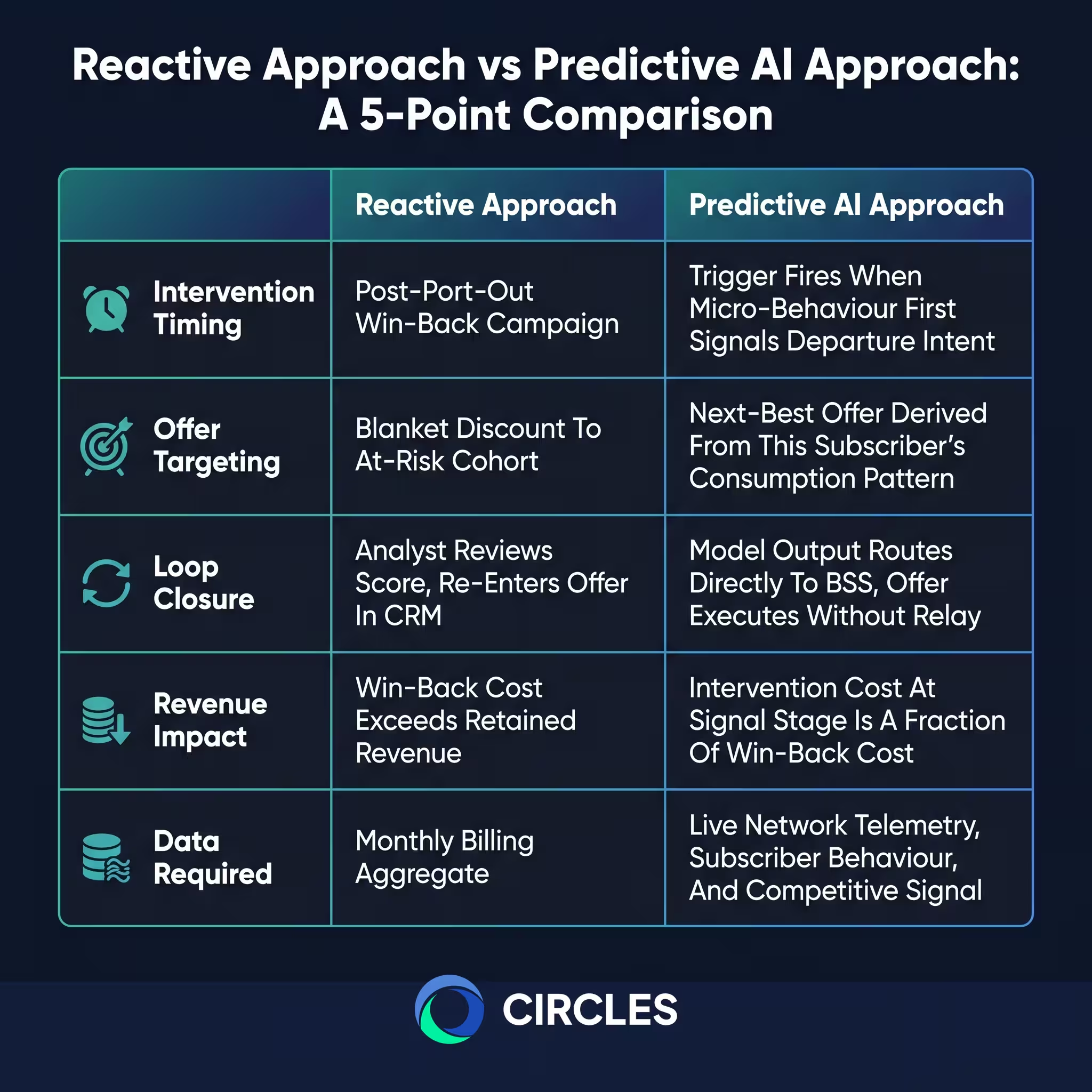
Predictive retention AI delivers three outcomes that reactive churn management cannot: early intervention before intent crystallises, personalised offer at the moment of maximum receptivity, and a closed loop from model output to BSS execution without a human relay. Each outcome depends on the architecture beneath the model, not the model itself.
The relay elimination is the commercial lever. Every hour between a churn signal and a retention offer represents subscriber intent that continues to harden. A write path from model to BSS removes that hour.
Why Churn Models Fail Without the Right Architecture
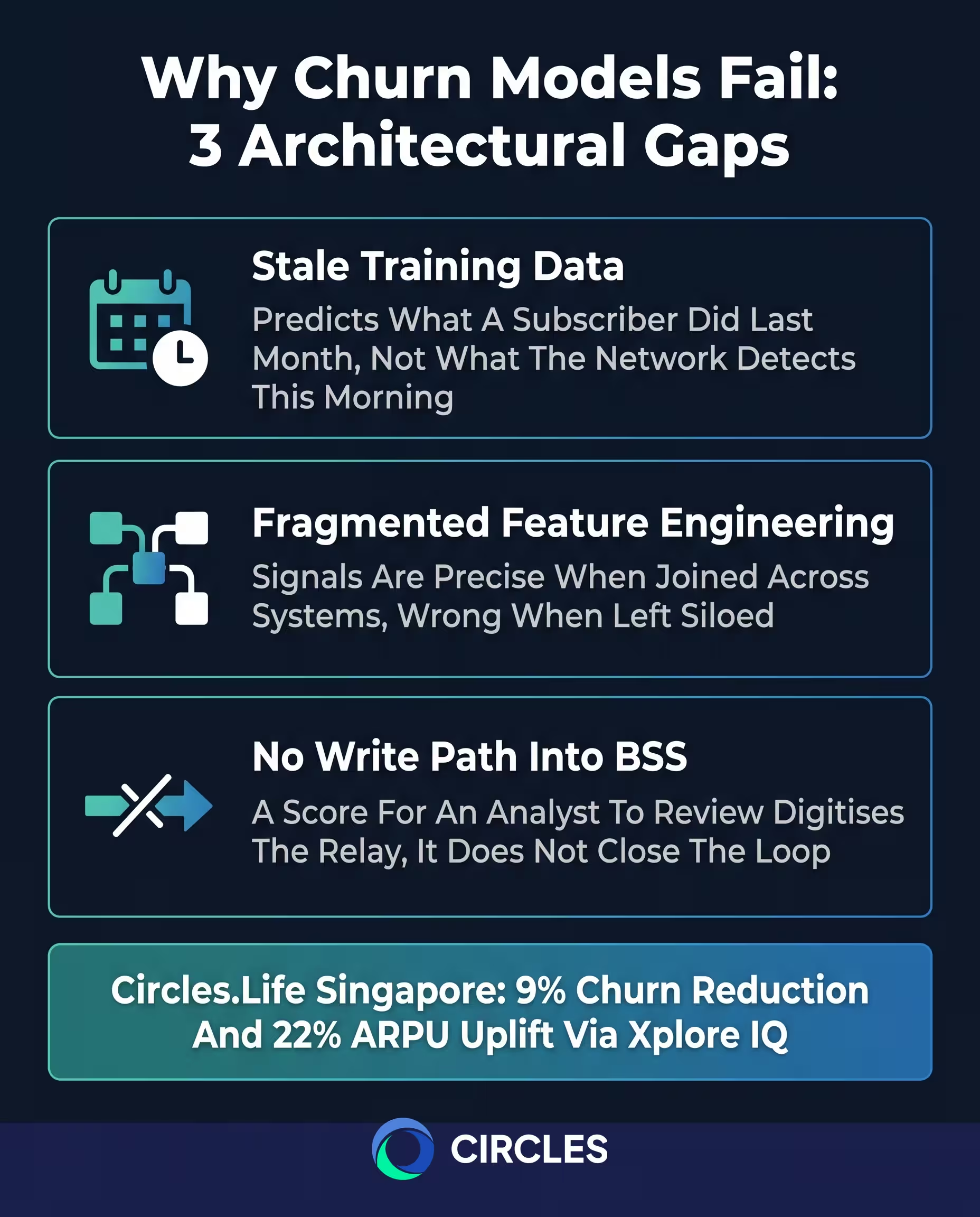
Most telco churn models fail not because the model is wrong but because the data beneath it is stale, the features are fragmented across siloed systems, and the output has no route into the execution layer. Peer-reviewed research records ensemble churn models achieving recall up to 93% with precision up to 99% (Zhou et al., *PLOS ONE*, 2023). Accuracy is not the constraint. Architecture is.
Three architectural failures account for the majority of stalled deployments:
The departure sequence follows a consistent pattern across operators: micro-behaviour drift appears first (reduced session frequency, data cap tolerance changes, shift in app usage), then a service or billing complaint surfaces, then the subscriber begins comparing competitor tariffs. A churn model that monitors billing events alone detects the complaint stage, not the drift stage. By the complaint stage, the subscriber is already halfway out. The intervention window sits in the micro-behaviour phase, which precedes the complaint by weeks.
What data does a telco churn prediction model require?
A telco churn prediction model requires live subscriber telemetry (not overnight batch exports), joined features across network quality, billing, support, and competitive signal data, and a write path from model output to the BSS execution layer. Models trained on billing aggregates alone produce predictions that are already stale by the time the billing cycle closes.
Build the Churn Engine with Circles
The Circles AI-Native Platform synchronises the full retention stack: live telemetry ingestion, joined feature engineering, churn model deployment, and BSS write path, so operators close the loop from signal to intervention without rebuilding the architecture beneath the model. The model layer governs residency and audit at every inference call; the orchestration layer routes the output to the right BSS action.
Operator deployments on this architecture demonstrate the intervention window: Circles.Life in Singapore achieved a 9% churn reduction through hyper-personalised retention offers delivered via the Xplore IQ deployment, alongside a 22% ARPU uplift from the same deployment. McKinsey's analysis of telecom churn management finds that a comprehensive, analytics-driven approach to base management can reduce churn by as much as 15%, consistent with intervention at the micro-behaviour signal rather than the billing complaint.
Operators that classify subscriber churn as a data latency problem, not a service problem, stop paying win-back costs after departure and start preventing departures at the signal. The technical architecture behind the churn model is at real-time churn prediction.