

Knowledge Hub
5
5
min read
AI-Driven Loyalty Systems: Beyond Points and Rewards
Traditional loyalty programmes are cost centres. AI loyalty catalyses retention at the moment of departure intent, personalised and predictive by design.
Why Points Programmes Are Liability Management, Not Loyalty
Traditional loyalty programmes catalyse a points liability on the balance sheet while producing subscriber engagement metrics that correlate weakly with actual retention. The programme issues points at acquisition or transaction; the redemption event is unpredictable; the subscriber who redeems highest-value rewards and churns immediately is the loyalty programme's most expensive participant.
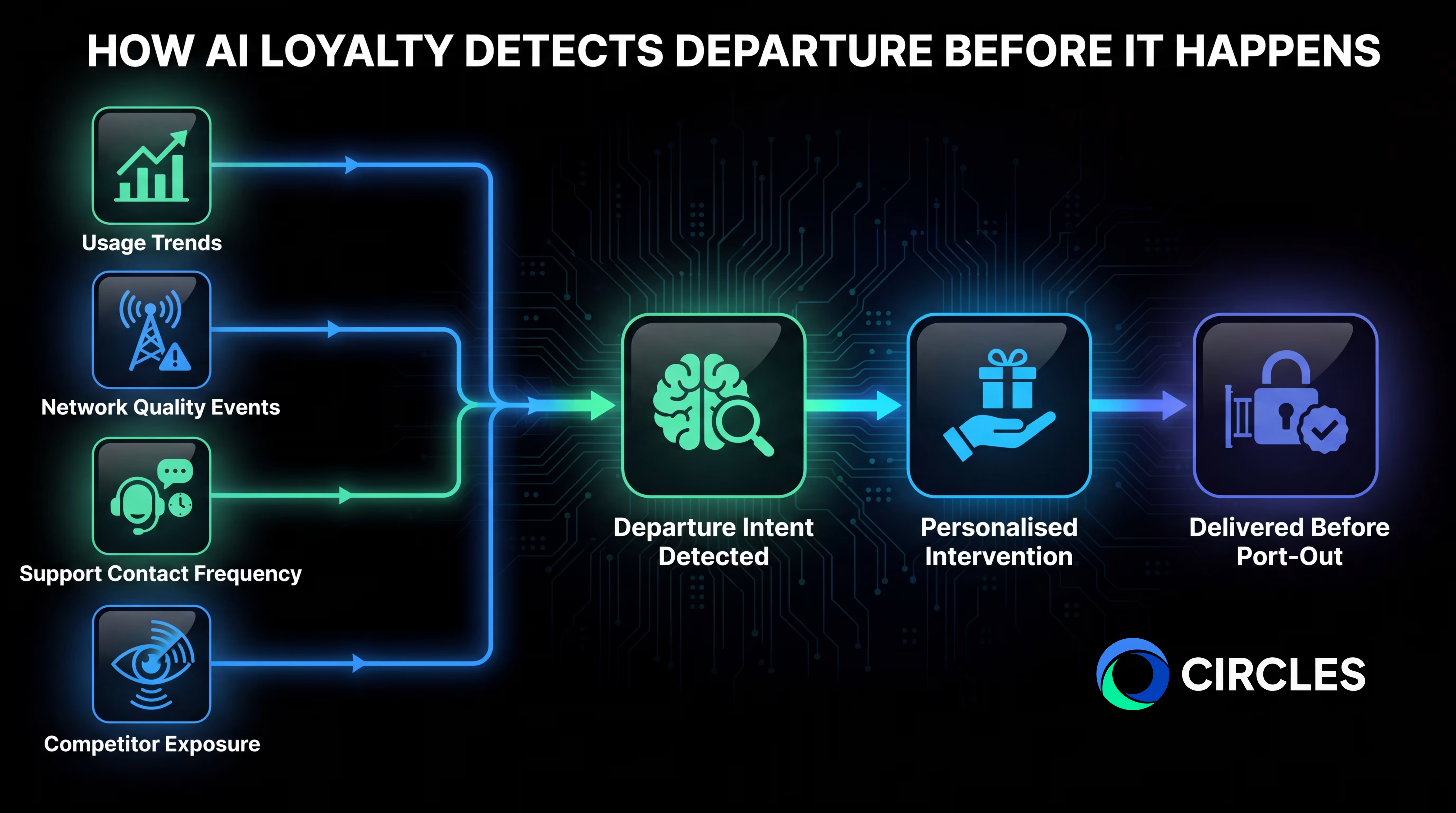
AI loyalty operates on a different logic: it detects the departure signal before the subscriber decides to leave and intervenes with a personalised action that removes the reason for departure. The friend who knows you're about to leave the party does not hand you a stamp card; they bring you the specific drink you wanted, at the moment you wanted it, because they were paying attention.
What is an AI loyalty system in telecom?
An AI loyalty system in telecom is a predictive retention architecture that reads subscriber behaviour signals (usage trends, network quality events, support contact frequency, competitor exposure) and generates a personalised intervention at the moment those signals indicate departure intent. The output is not a points award; it is a targeted action the platform executes through the BSS, app, or agent channel before the subscriber initiates a port-out.
Points Programmes vs AI Loyalty: The Structural Comparison
AI loyalty Catalyses retention at the moment of maximum impact, the departure signal, while points programmes accumulate liability without addressing the signal that causes departure. The comparison is architectural: the mechanisms that drive each system produce different outcomes by design.
The liability point is operationally significant. A telecommunications operator with 10 million subscribers on a points programme carries a redemption liability that is structurally independent of whether the operator actually retains any subscriber. AI loyalty eliminates the liability by replacing the programme mechanism with a signal-driven architecture.
How does AI loyalty differ from a traditional points programme in telecom?
A points programme accrues liability at every transaction and leaves the intervention timing to the subscriber's redemption decision. An AI loyalty system detects the departure signal in real-time, generates a personalised offer specific to that subscriber's consumption pattern, and executes the intervention before the subscriber initiates a port-out. AI loyalty eliminates the accrual liability and moves the retention action to the signal rather than the symptom.
What an AI Loyalty Architecture Includes
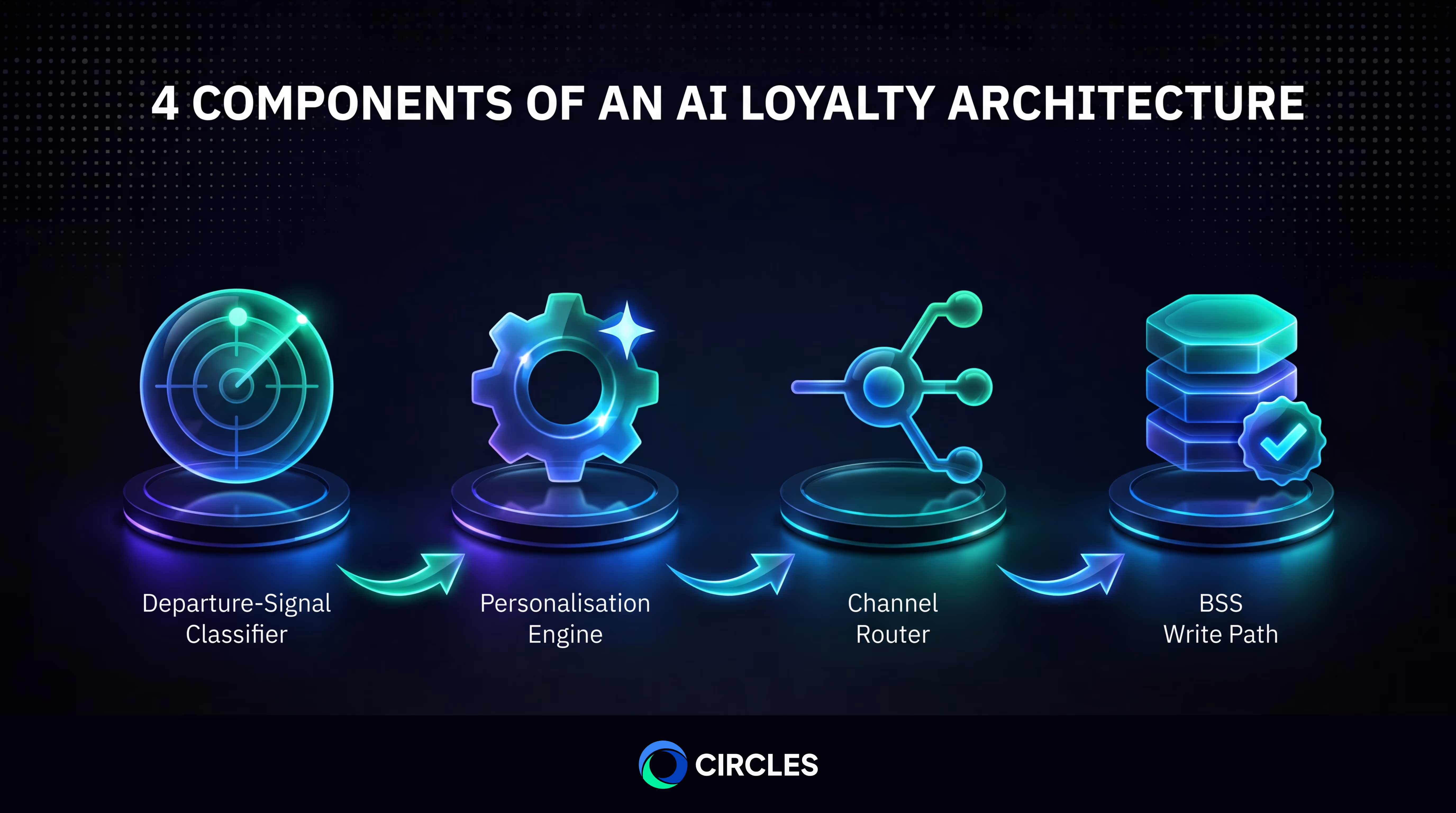
A production AI loyalty system requires four components: a departure-signal classifier that reads live subscriber behaviour, a personalisation engine that generates the offer specific to this subscriber's context, a channel router that delivers the offer through the right touchpoint at the right moment, and a BSS write path that executes the offer without analyst intermediation. Missing any of these components degrades the system from predictive loyalty to digital points management.
Departure-signal classifier: Reads the subscriber's usage trend, network quality experience, support contact pattern, and competitive tariff exposure. Classifies the probability and timing of departure intent. The classifier inherits the shared feature infrastructure from the churn prediction model: the same signals that predict churn are the signals that identify the loyalty intervention window.
Personalisation engine: Generates the specific offer (a data top-up, a tariff upgrade, a service credit, a device offer) based on the subscriber's consumption pattern and the nature of the departure signal. A subscriber departing due to network quality receives a different intervention than one departing due to tariff comparison.
Channel router: Delivers the offer through the subscriber's highest-engagement channel at the moment of detection. In-app notification at peak usage hours; SMS for subscribers with low app engagement; agent prompt for subscribers with recent support contact history.
BSS write path: Executes the offer the moment the subscriber accepts, without re-entry by an analyst or campaign manager. The write path is the component most commonly absent from loyalty programmes marketed as AI-powered but operationally running on batch campaign workflows.
Build AI Loyalty with Circles
The Circles AI-Native Platform Catalyses the full AI loyalty stack: departure-signal classification, personalisation, channel routing, and BSS execution, as an embedded component of the retention architecture, not a standalone loyalty SaaS layered above the BSS. The signals that inform loyalty are the same signals that inform churn prediction and CX personalisation; the architecture compounds across all three.
Operators that embed AI loyalty into their BSS stop running loyalty as a cost centre and start running it as a real-time retention signal. The churn engine architecture, the predictive foundation that AI loyalty draws on, is at predictive AI for retention.