

Knowledge Hub
5
5
min read
AI-Driven Customer Experience: Predict the Failure Before the Call
AI CX personalisation predicts subscriber failures and next-best actions before the customer contacts support. Proactive resolution, not reactive care.
What AI CX Actually Does
AI customer experience orchestrates proactive interventions across the subscriber journey (resolving network issues, presenting relevant offers, and answering service questions) before the subscriber decides to call. The distinction from traditional CX is not the channel; it is the direction. Traditional CX is reactive: a subscriber encounters a problem, contacts support, and receives a resolution. AI CX is predictive: the platform detects the problem in the network telemetry, resolves it or notifies the subscriber, and eliminates the contact entirely.
AI CX works the way a great concierge does: anticipating a guest's need before the guest voices it. It reads the subscriber's service context (network quality at their location, usage pattern against plan limits, recent service history) and acts on that context before the subscriber reaches the point of frustration that triggers a contact.
TM Forum's *2025 Autonomous Operations Maturity Industry Insights* (IG1346) survey, previewed via TM Forum's autonomous operations coverage, records a 71% improvement in customer satisfaction scores at Level 4 maturity, an outcome that reflects proactive resolution, not faster reactive handling.
What is AI customer experience personalisation in telecom?
AI customer experience personalisation in telecom is a system that reads each subscriber's real-time service context (network quality, usage against plan, support history, location, device type) and orchestrates a proactive response before the subscriber contacts the operator. The response takes the form of a network remediation, a targeted offer, a proactive notification, or a next-best-action recommendation delivered through the subscriber's preferred channel.
The Architecture Behind Proactive CX
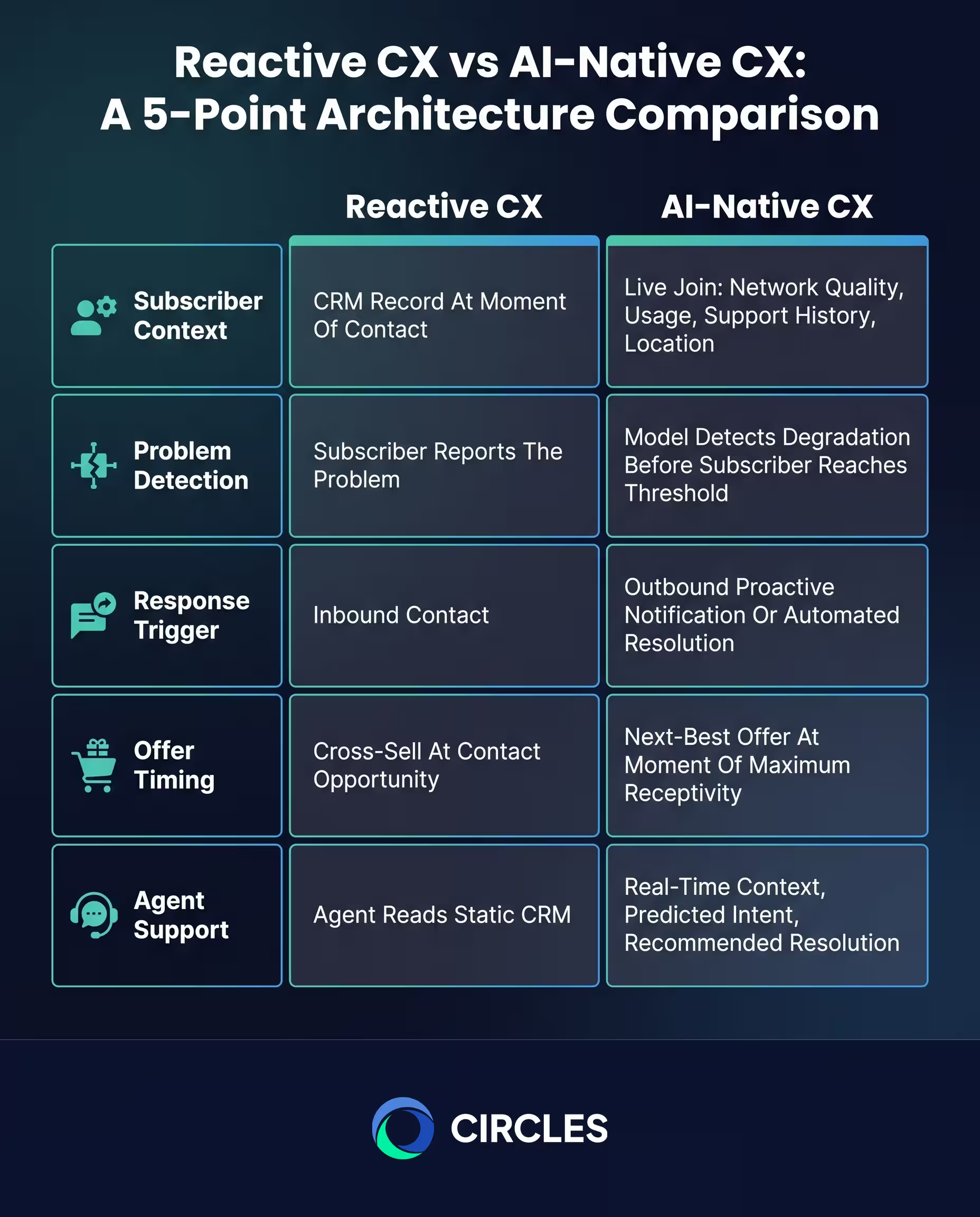
Proactive CX requires three architectural components that reactive call centre operations do not have: a real-time subscriber context layer that joins network signals with CRM data, a prediction model that classifies the subscriber's next most likely failure or need, and a channel orchestration layer that delivers the intervention before the failure point. Traditional CX tools handle the delivery channel well; they lack the first two components.
The subscriber context layer is the architectural enabler. An operator whose OSS and CRM do not share a live data path cannot build a proactive intervention because the network quality event and the subscriber record are in separate systems with no real-time join.
Three Proactive CX Patterns That Reduce Contact Volume
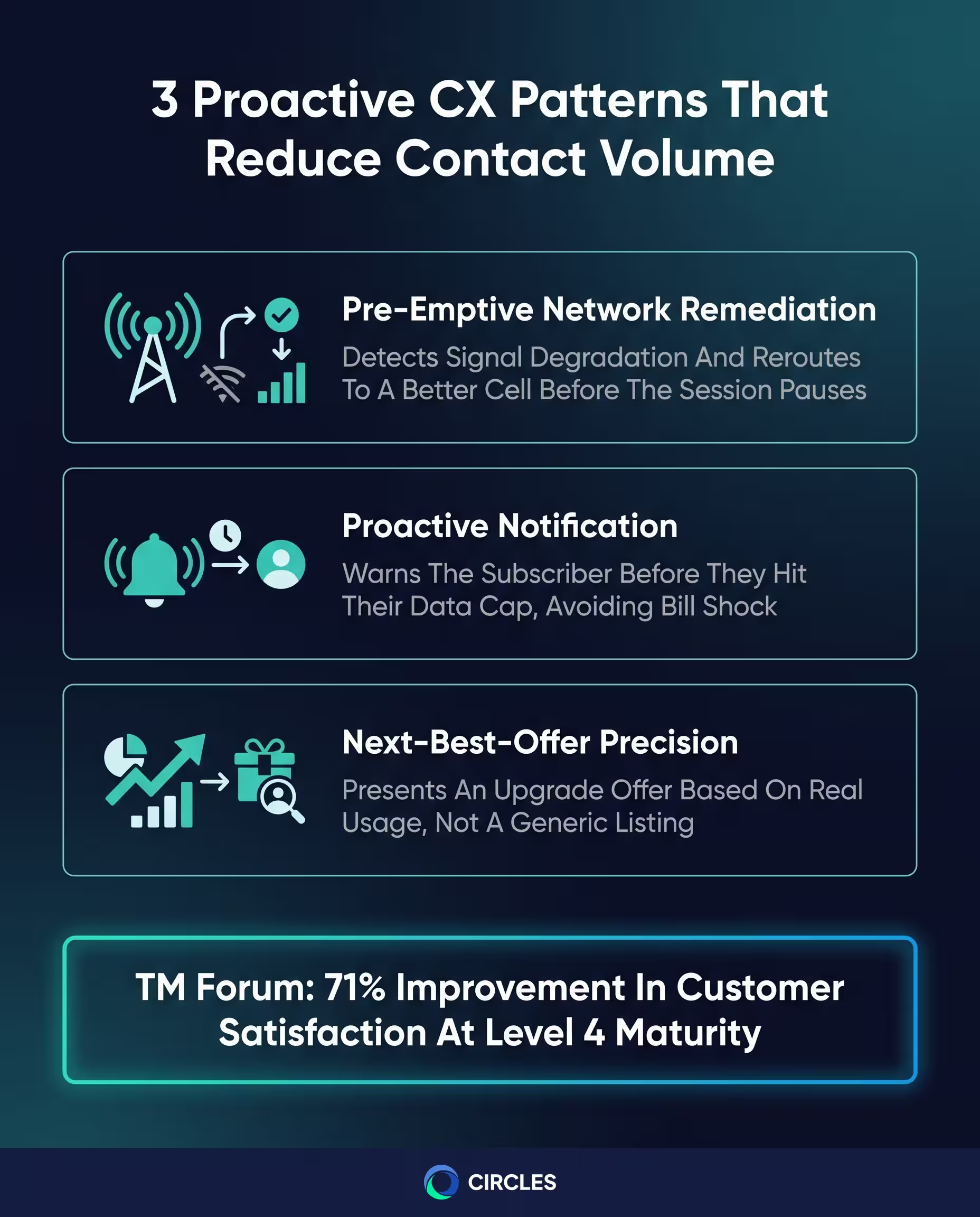
AI customer experience classifies subscriber service events into three proactive intervention patterns that each reduce inbound contact volume: pre-emptive network remediation, proactive notification, and next-best-offer precision. Each pattern depends on detecting the subscriber's situation before the subscriber does.
Pre-emptive network remediation: The platform detects signal degradation at the subscriber's location and triggers an automatic network optimisation or hands off to a better cell before the subscriber's streaming session pauses. The subscriber never knows the event occurred; the outcome registers as zero-fault experience rather than fast-resolution experience.
Proactive notification: The platform detects that a subscriber will hit their data cap within the next two hours based on current usage velocity. A proactive notification, through the app, SMS, or IVR, gives the subscriber the option to add a data pack before the subscriber reaches the cap. The subscriber avoids the bill shock; the operator avoids the billing dispute contact.
Next-best-offer precision: The platform detects that a subscriber's data usage has exceeded their plan limit three months in a row and presents an upgrade offer at the next login rather than waiting for the subscriber to initiate an upgrade search. The offer is specific to the subscriber's actual usage pattern, not a generic tariff listing.
How does AI CX personalisation reduce call centre volume?
AI CX personalisation reduces call centre volume by detecting and resolving the service events that trigger inbound contacts before the subscriber reaches the contact threshold. A subscriber whose network degradation resolves automatically does not call; a subscriber who receives a proactive data-cap warning before it triggers bill shock does not dispute the bill. Volume reduction is a function of detection accuracy and intervention speed, not just deflection scripting.
Build Proactive CX with Circles
The Circles AI-Native Platform Orchestrates the full proactive CX stack: live subscriber context join, predictive failure classification, and multi-channel intervention delivery, as an embedded component, so operators do not assemble the proactive layer from separate analytics and CRM vendor tools. The AI retention architecture that prevents churn and the AI CX architecture that prevents contact failure share the same subscriber data foundation.
Operators that orchestrate proactive CX stop measuring CX performance by how fast agents resolve contacts and start measuring it by how many contacts never occur. The AI-native retention outcome, churn prevention through proactive intervention, is at predictive AI for retention.