

Knowledge Hub
5
5
min read
Agentic AI for Telecom: Moving Beyond Conversational Chatbots
Agentic AI has native BSS and OSS access to resolve subscriber issues end-to-end without human escalation. Chatbots describe the problem; agents fix it.
What Separates an Agent from a Chatbot
Agentic AI orchestrates end-to-end resolution by taking actions in BSS and OSS systems directly (provisioning a plan, issuing a credit, rerouting a fault ticket, updating an account) rather than describing what the subscriber needs to do to resolve the issue themselves. A conversational chatbot understands the intent and returns an answer. An agent understands the intent and executes the resolution.
The operations control tower analogy is exact: a control tower detects signals across customer, network, billing, and service systems, coordinates the right agents and workflows, and executes the next governed action. With native BSS and OSS access, it closes the loop. Without that access, it raises a better ticket. A chatbot without BSS access is not a control tower. It is a radio that describes the runway but cannot clear it.
Subscriber tolerance for chatbots that cannot act is measurably declining. The issue is structural, not conversational quality: a chatbot without BSS access cannot provision, cannot credit, and cannot modify the account. No matter how accurate its language model, it cannot do anything the subscriber cannot do through self-service. Agentic AI connects the language model to the systems that hold the ability to act.
What is agentic AI in telecom?
Agentic AI in telecom is an AI system with native access to BSS, OSS, and CRM systems that executes subscriber service actions (plan changes, billing adjustments, fault resolutions, account modifications) without human intermediation. Unlike conversational chatbots, an agentic system does not return a recommended action for the subscriber or agent to execute; it executes the action directly within the bounds of its authorisation policy.
Chatbot vs Agent: The Capability Gap
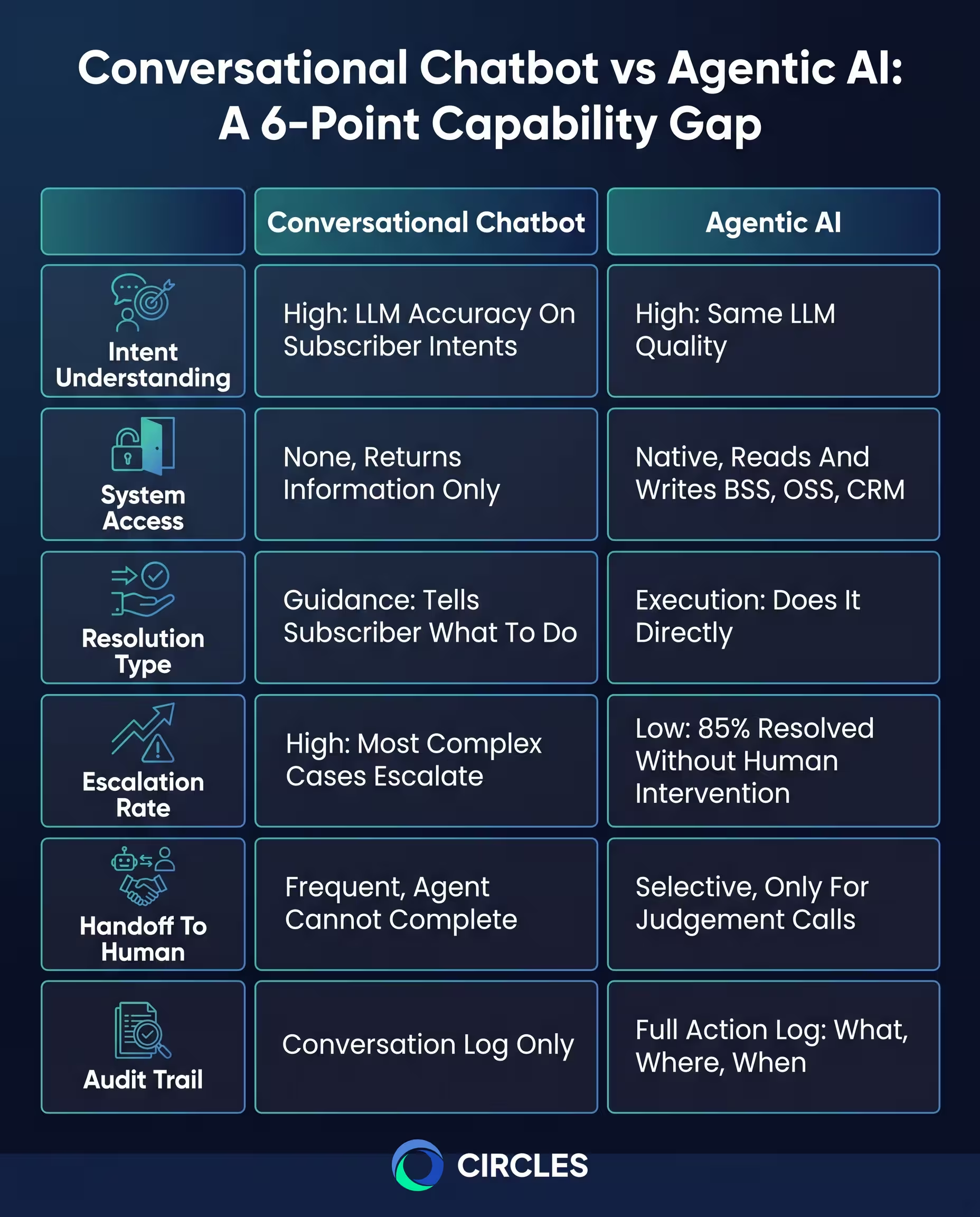
The capability gap between a conversational chatbot and an agentic AI system is not conversational accuracy. It is system access and action authority. Both systems can understand a subscriber's intent with high accuracy; only the agent can act on that intent without routing through a human.
The audit trail point carries regulatory significance. An agent that modifies a subscriber's account, issues a credit, or changes a billing plan must produce an immutable record of the action for dispute resolution and regulatory review. The AI-First Model Layer governs audit at every agent decision call.
What Agentic Telco AI Requires
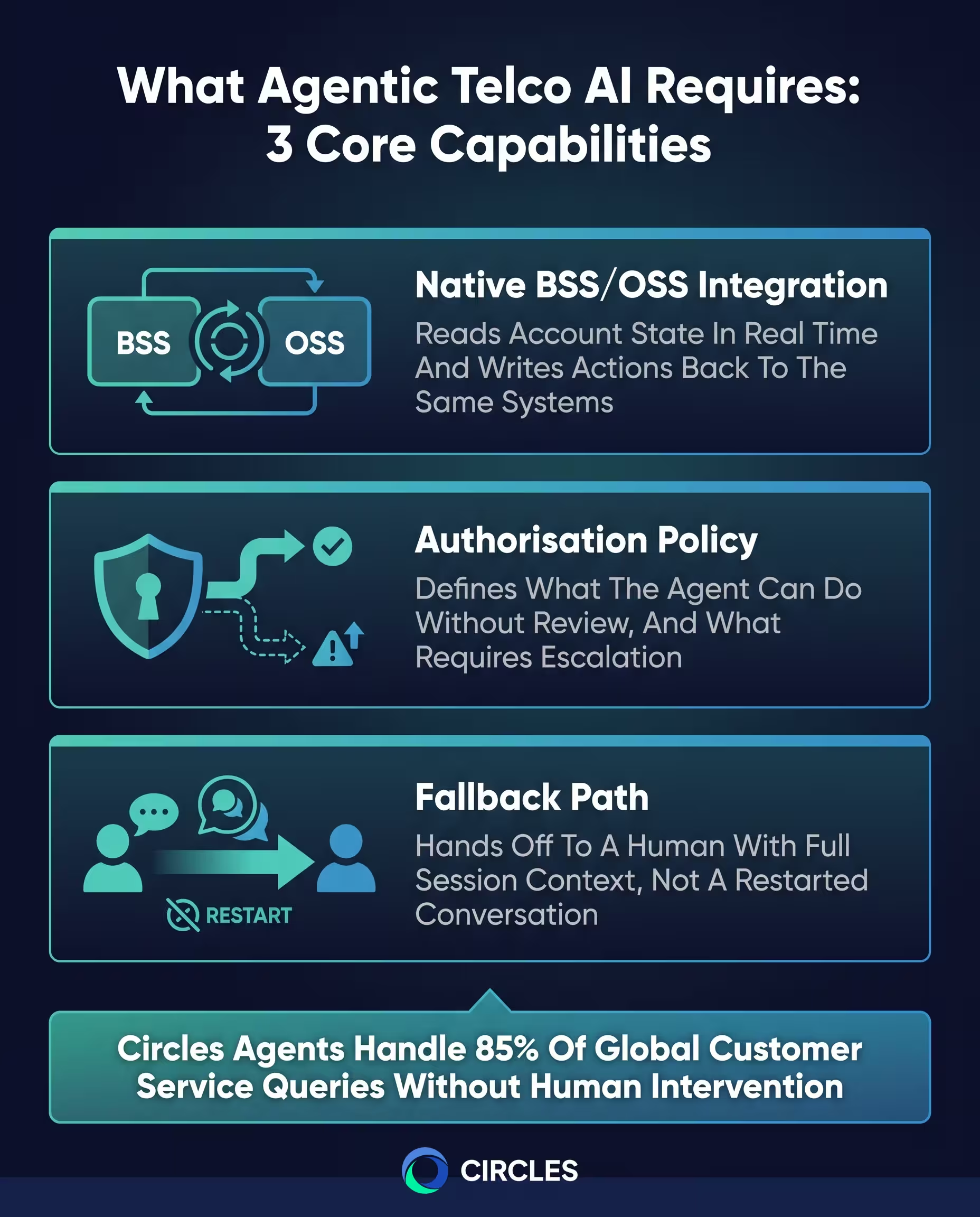
A production agentic system for telecom requires three capabilities that distinguish it from a chatbot with enhanced scripting: native BSS/OSS integration, an authorisation policy that defines action scope, and a fallback decision path that routes to human agents for cases that exceed the agent's authorisation. Deploying without all three produces either a constrained agent that escalates most cases to humans (insufficient integration) or an unconstrained agent that executes actions without governance (insufficient authorisation policy).
Native BSS/OSS integration: The agent reads subscriber account state from BSS in real time and writes actions (credits, plan changes, fault tickets, address updates, service provisioning changes) back to the same systems. Production Circles deployments integrate across billing, CRM, network provisioning, and service catalogue systems; the authorisation policy governs which actions the agent executes without human review. Integration through a message queue or API gateway rather than a direct write path introduces latency that degrades the subscriber experience.
Authorisation policy: Defines what the agent can do without human review (issue a credit under a threshold; change a plan tier; open a fault ticket) versus what requires escalation (account closure; fraud flag; out-of-policy waiver). The policy is encoded at the access layer, not in the language model's training.
Fallback path: When a subscriber request exceeds the agent's authorisation scope or the agent's confidence in the correct resolution falls below the threshold, the handoff to a human agent includes the full session context: what the subscriber said, what the agent understood, what actions the agent already took. The human agent does not restart the conversation.
What does agentic AI resolve in telecom without human escalation?
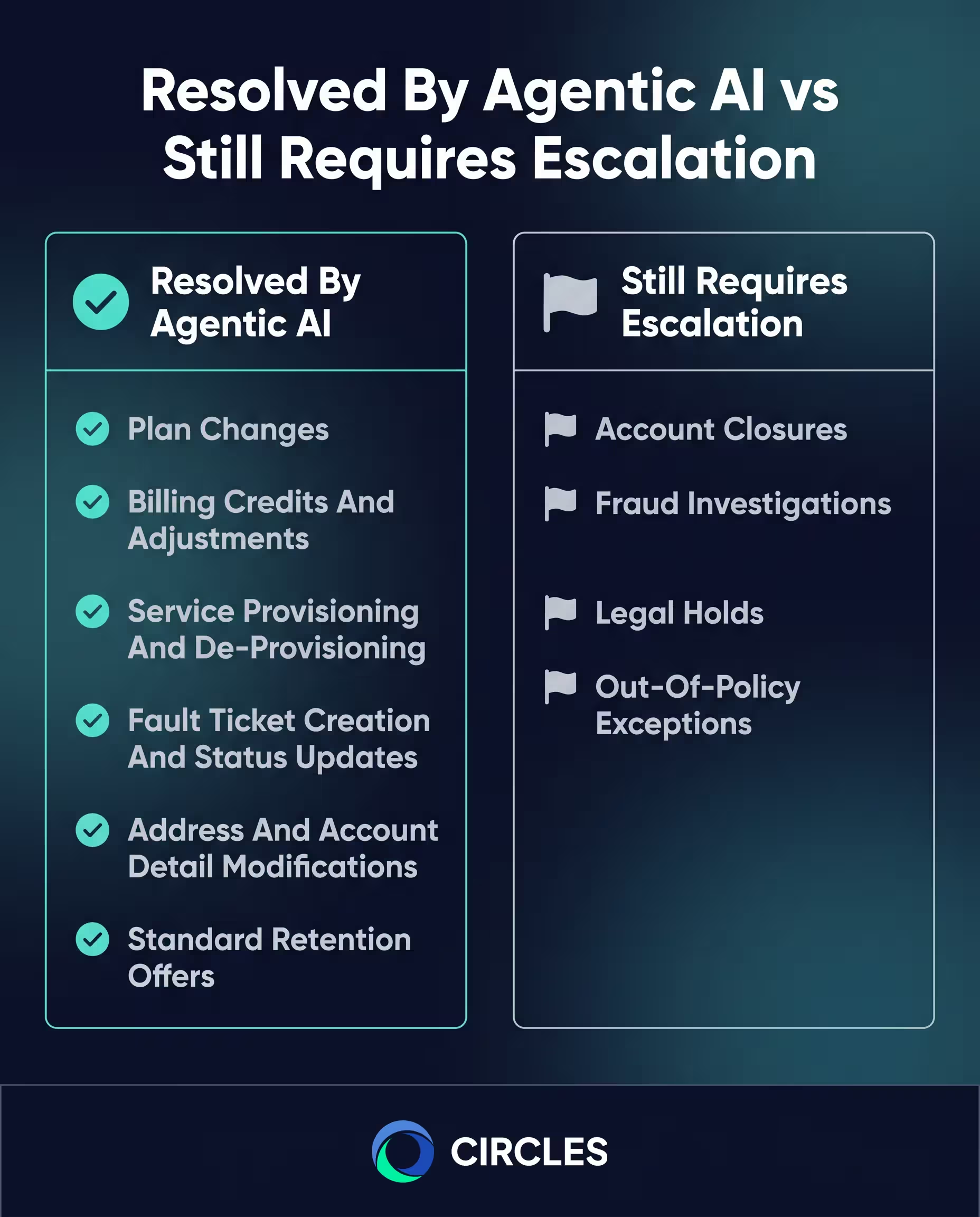
Agentic AI resolves plan changes, billing credits and adjustments, service provisioning and de-provisioning, fault ticket creation and status updates, address and account detail modifications, and standard retention offers, all within the scope defined by the operator's authorisation policy. Cases that typically require escalation include account closures, fraud investigations, legal holds, and out-of-policy exceptions. The boundary shifts as the authorisation policy expands over time.
Build Agentic AI with Circles
The Circles AI-Native Platform Orchestrates the full agentic architecture: native BSS/OSS integration, authorisation policy enforcement, action audit log, and human-agent handoff, as a production-ready component, not a chatbot upgrade. The model layer governs every agent decision; the orchestration layer executes every agent action against the live BSS state.
Circles agents handle 85% of global customer service queries without human intervention, with native BSS and OSS access as the enabling architecture. Operators that move beyond conversational AI stop measuring customer service by CSAT scores on chatbot sessions that escalate and start measuring it by the volume of issues the agent resolves before a human is involved. The generative AI foundation that agentic AI builds on, and how Circles positions the transition from Gen AI to agentic, is at generative AI in telecom.