

Knowledge Hub
5
min read
Predictive ARPU Growth Models for Techcos
Predictive ARPU models synchronise live subscriber behaviour with next-best-offer engines to surface upsell moments before a customer compares tariffs.
Why Today's Static, Schedule-Based Tariff Optimisation Misses the Revenue Window
Predictive ARPU models synchronise real-time subscriber consumption signals with next-best-offer logic to surface upsell moments at the exact point of maximum receptivity, not during a quarterly tariff review. Today's static, schedule-based tariff optimisation asks every subscriber the same question on the same schedule. Predictive ARPU asks each subscriber the right question at the moment their behaviour signals intent to spend more.
Simon-Kucher's Global Telecommunications Study 2026 finds that only 54% of customers view their telco's services as good value for money, a figure that coexists with ARPU declining across premium, mid-market, and budget segments. The gap points to a structural timing failure rather than a willingness-to-pay problem: operators ask the upgrade question on a quarterly campaign schedule, not at the moment a subscriber signals intent. Predictive ARPU models address the timing failure, not the value perception.
The distinction is timing. A subscriber who streams four hours of HD video on a capped plan is signalling willingness to pay for an uncapped upgrade. That signal is present in the network telemetry for a matter of hours. A quarterly ARPU report registers it as average data consumption for the period; a predictive model fires the upsell trigger while the subscriber is still on the session.
What is predictive ARPU in telecom?
Predictive ARPU in telecom is a revenue optimisation model that reads each subscriber's live consumption behaviour, identifies the moment when usage signals an unmet need, and presents a targeted upgrade or add-on offer before the subscriber starts comparing competitor tariffs. The output is a next-best-offer recommendation that executes through the BSS or CRM directly, not a report for a marketing analyst to act on at the next campaign cycle.
What Predictive ARPU Models Require
A predictive ARPU model requires three inputs that static tariff tools do not use: live behavioural telemetry, a unified subscriber view that joins network usage with billing and support history, and a write path into the offer execution layer that removes the human relay from the upsell moment. Without all three, the model produces a recommendation too late and delivers it to the wrong channel.
What Predictive ARPU Delivers
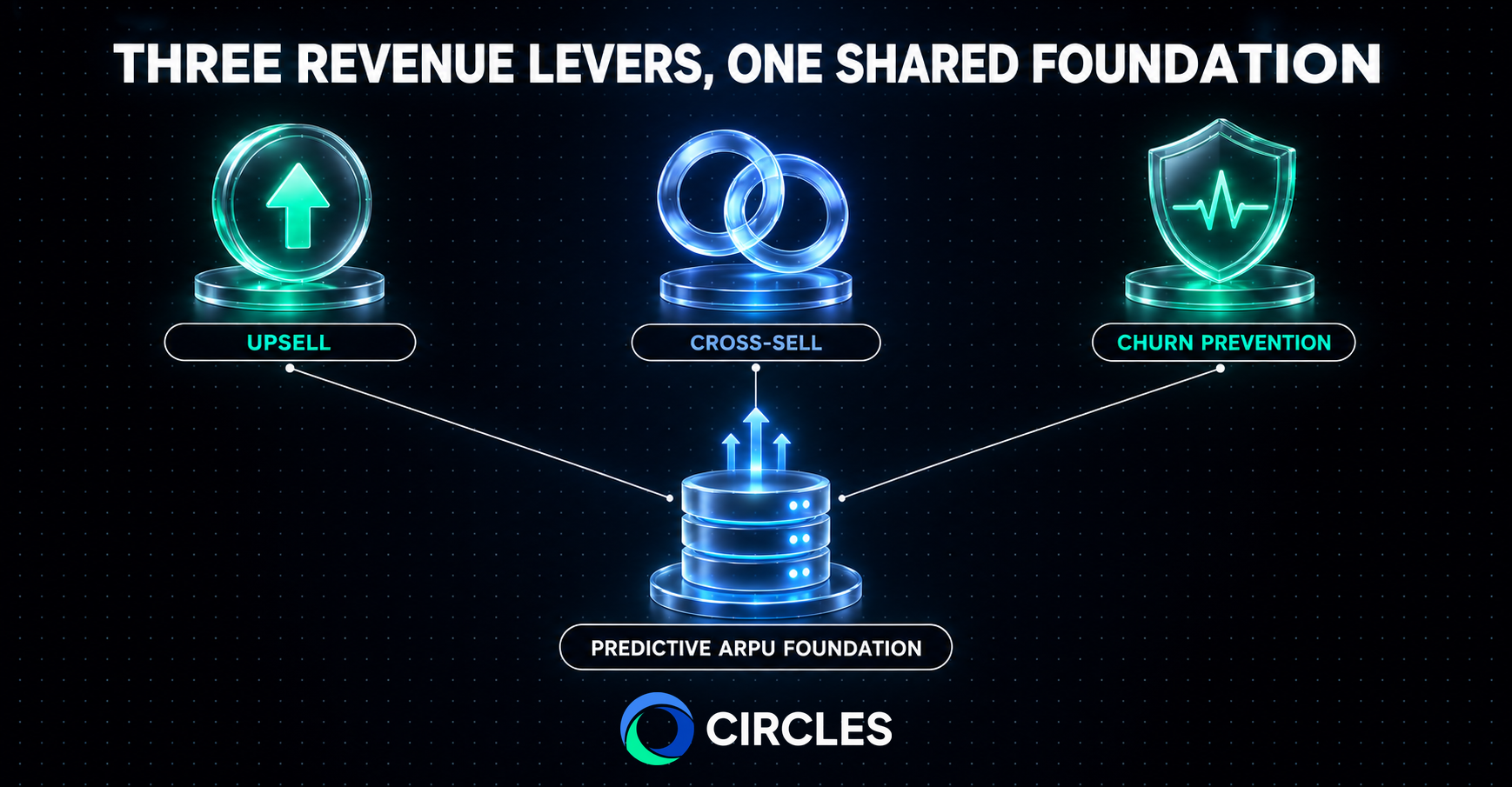
Predictive ARPU Optimises three revenue levers that static approaches leave untouched: upsell conversion at the moment of intent, cross-sell based on joined usage signals, and churn prevention through offer timing that removes the competitor comparison window. Each lever requires the same architectural foundation (live telemetry, unified subscriber view, write path to execution), so the platform investment compounds across all three.
How does predictive ARPU differ from standard revenue assurance?
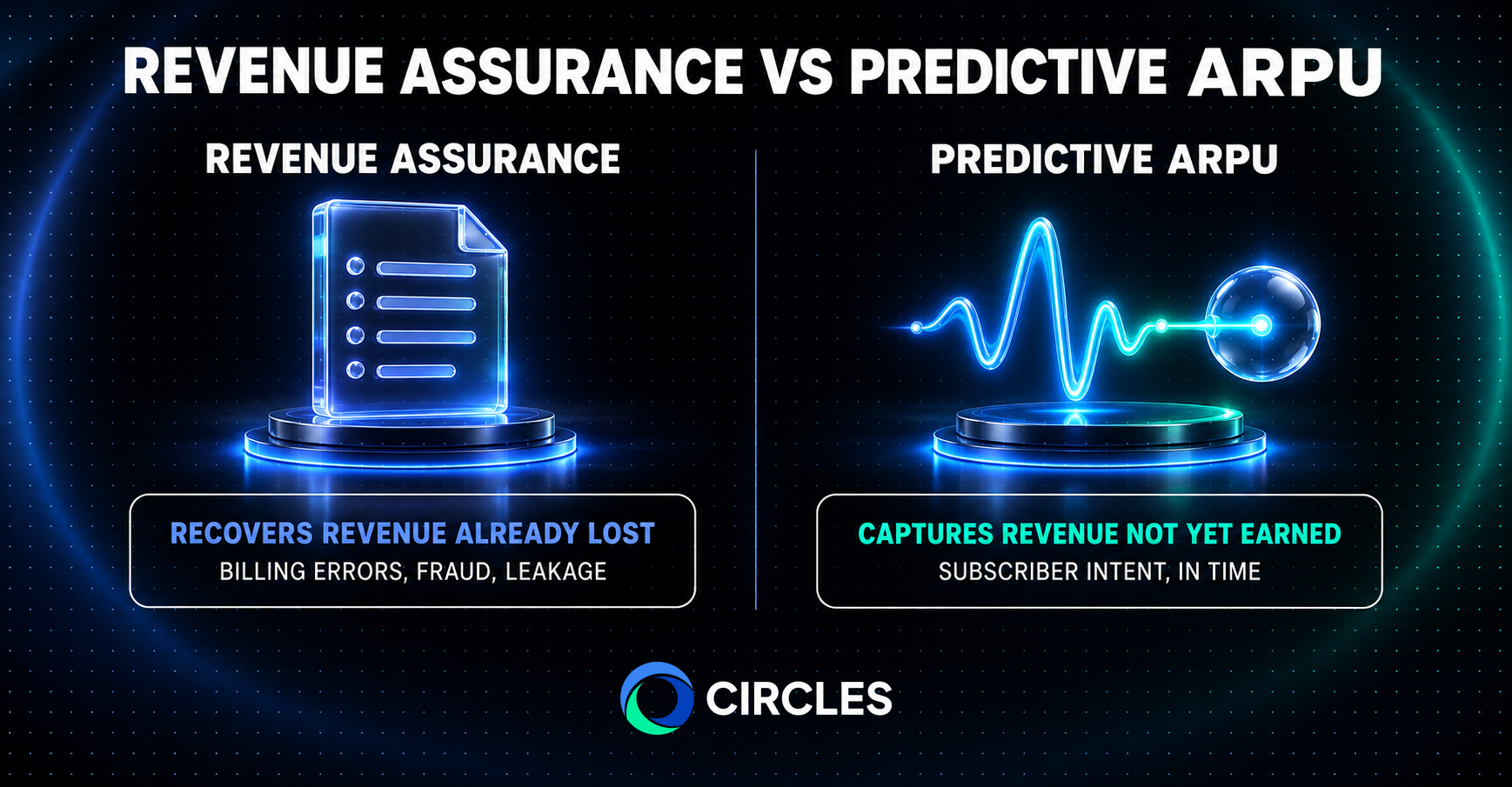
Revenue assurance recovers revenue already lost through billing errors, fraud, or leakage. Predictive ARPU models capture revenue not yet earned by identifying the moment a subscriber signals willingness to pay more and executing an offer before that moment passes. The two are complementary; neither substitutes for the other.
Build Predictive ARPU with Circles
The Circles AI-Native Platform synchronises live subscriber telemetry with next-best-offer logic and BSS execution to close the loop from usage signal to revenue-generating offer without analyst intermediation. The architecture that enables predictive ARPU (live telemetry, joined feature layer, model orchestration, write path) is the same architecture that powers churn prevention and network optimisation.
For CFO evaluation cycles, the commercial case rests on a single metric: margin-adjusted incremental ARPU with a defined payback window. Operators that present predictive ARPU as a revenue-per-subscriber uplift story without a payback period lose the approval gate. The Circles implementation surfaces margin-adjusted ARPU uplift and payback timeline as configuration outputs, so the ROI case enters the deployment brief rather than emerging as a post-deployment estimate.
Operators that embed predictive ARPU into their BSS stack stop leaving revenue at the moment of subscriber intent and start capturing it.