

Insights
7
5
min read
MWC 2026: Agentic AI & The Rise of Anticipatory Telcos
Some joked that MWC 2026 should be nicknamed NWC (NVIDIA World Conference) 2026 with how prevalent AI was throughout the event. With the “IQ Era” as the main theme, both Bain1 and BCG2 noted that telcos are adopting AI as a strategic core and powering their shift to intelligent services. AI, and particularly agentic AI, is not being rolled out across telecommunication network operations, customer experiences, and enterprise offerings.
Agentic AI usage in telecommunications was naturally a part of MWC 2026’s highlights. As opposed to GenAI-powered chatbots, agentic AI refers to an artificial intelligence system that can accomplish specific tasks with limited supervision.
Agentic AI consists of multiple AI agents that can mimic human decision-making to solve problems in real time. In a multi-agent system, each agent performs a specific subtask and can use tools to reach their goal while AI orchestration helps to coordinate their efforts. Each specialized agent can also coordinate with one another across domains instead of operating as isolated assistants, effectively integrating BSS and OSS systems.

Circles’ CEO Rameez Ansar summarized the role agentic AI plays in embedding AI at the telco’s core this way:2
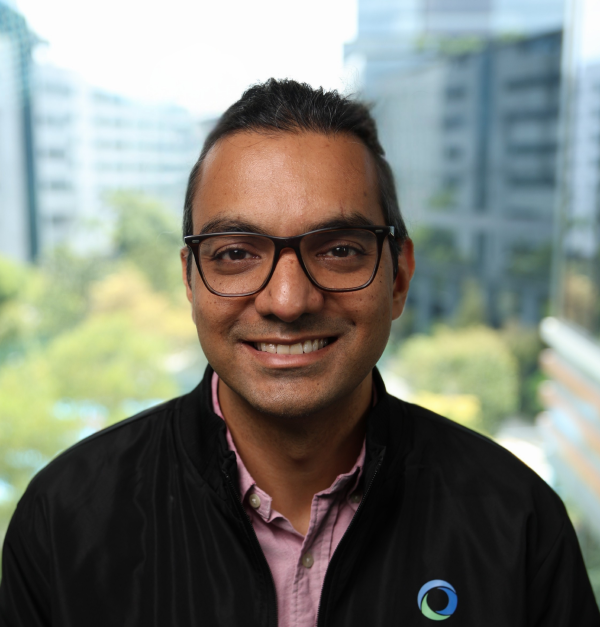
And creating a framework around your data that says this telco can really operate itself even with high autonomous commands like “Make me money this month.”
Baby Steps for Agentic AI
GSMA, in its Global Mobile Trends 2026 report,3 highlighted that back in 2025, agents dominated the AI conversation within the telecommunications industry. Since then, more telcos have started adopting agentic AI, with around 60 percent of large telco enterprises already having live deployments or planning to go live within 12 months.4

However, there have also been some rising concerns around agentic AI governance, compliance, and AI-enabled cyber threats. This resulted in a number of telecommunication service providers (telcos) remaining in a testing or planning phase with agentic AI.
On the other hand, GSMA also pointed out that there is little doubt that agents can deliver value.3 They predict that some early deployments and trials will eventually prove that value as they scale, eventually powering the trend where telcos shift from AI pilots to scaling AI across their organizations.
And There Are Indeed Some Agentic AI Success Cases Emerging
One highlight was the conversation highlighted by BCG with Dirk Grote (Global Head of Telecom at ServiceNow). In the video,5 he discussed that telcos are in the process of adjusting their workflows to gain greater efficiency from agentic AI. In the scenario, human field service agents previously would need to look into around five different systems to gather data for their customer before they could solve the case.
To get work orders into the system, human agents would need to do things such as pulling data from various other systems to validate, qualify, and ensure all the background information was in the case file. AI agents were then launched that could do all this legwork for them, ensuring everything was in order before a human even touches the case, giving thousands of hours back to the organization. 90 percent of the work orders were said to be of great quality and didn’t need to be reworked.5
The biggest benefit of this change is that AI no longer felt like a proof of concept and instead could be trusted by different departments and teams across the telco. By solving this ‘AI trust’ issue among the telco’s broader staff, the company has solved a major bottleneck to AI transformation and a shift from ‘monitoring AI use cases’ to scaling AI throughout the organization.
Anticipatory Customer Experiences: Preempting and Self-Healing
Dirk Grote’s interview highlighted how incorporating agentic AI into telco workflows can win telcos back thousands of hours and even increase trust in AI-generated output. Here are a few ways that AI in telcos is shifting from “assistant” to “actor”:6
Context-Based Independent Recommendations for Predictive Upselling and Cross-selling:
Multi-agent AI systems can customize telco services, product recommendations, and loyalty journeys based on 360-degree customer data, proactive pattern recognition, and insights from conversation and behavior patterns, such as offering more data for music or video streaming or better connectivity for online gaming. This can boost NPS and churn reduction.
The AI agent is able to respond to the user’s signals, such as their location. If it detects that they are at a foreign airport, the AI agent can pre-emptively check the local partner network’s current performance, configure a network slice, and offer a customized roaming offer to that customer.
In another upselling example, the agent observes the user's 5G-Advanced usage (e.g., high-frequency cloud gaming). It doesn't just upsell; it builds a custom "Gaming-First" plan and activates it instantly upon the user’s verbal "OK."
Agentic AI can also automate cross-selling, such as providing Spotify streaming packages to customers who like to use Spotify at specific times of the day. With the right data available, AI agents can build cross-selling campaigns that increase open rates by around 15% and see large improvements in push notification click rates.
Campaigns like this are powered by our AI-based customer aggregation and visualization tool. By analyzing more than 200 customer attributes, this tool can suggest microsegments and customer insights to power personalized marketing campaigns. Read the full story about that campaign here.
“Zero-touch” Self-Healing Tech Support:
Multi-agent systems consist of multiple specialized agents that can coordinate and share information across domains, moving away from reactive service and towards proactive customer service.
The agent can identify a "Poor Connection" alarm on the user’s specific cell tower. It can then run a remote diagnostic on the phone’s firmware and the tower’s load, then re-optimize the user's priority level without a ticket ever being raised.
In another example, an AI agent detects the dropped call in real-time via network telemetry, validates the customer’s high-value contract status in the BSS, and proactively applies a data credit or triggers a temporary network slice for "assured performance" all before the customer even thinks to open the support app.
This is known as “Preempt and Self-Heal,” where the problem is solved automatically by AI agents before the customer’s experience is even affected, improving loyalty and reducing churn.
Autonomous Networks
AI is now upgrading from monitoring networks to controlling and optimizing them. Players like Nokia and Ericsson demonstrated how their agentic AI managed RAN optimization, traffic routing, and fault detection.
This included supporting use cases like video streaming, generative AI queries, and more in the USA along with managing the RAN across a multi-vendor environment in Indonesia, which sets the stage for distributed AI intelligence that makes 5G networks more efficient and sustainable.7
Fraud Prevention
From SIM swap scams to account takeovers, telecommunications networks are frequent targets for fraud. Agentic AI is able to detect and act on suspicious behavior across telco systems, flag anomalies, and act quickly to block threats.
From Reactive Customer Experience to Anticipatory Care
Building agentic AI that helps telcos move from reacting to situations to anticipatory experiences is part of Circles’ vision to pioneer the world’s first AI Mobile Operator (AIMO). AIMOs can predict users’ needs and solve problems proactively, garnering cost and time savings while serving profitable new niches.
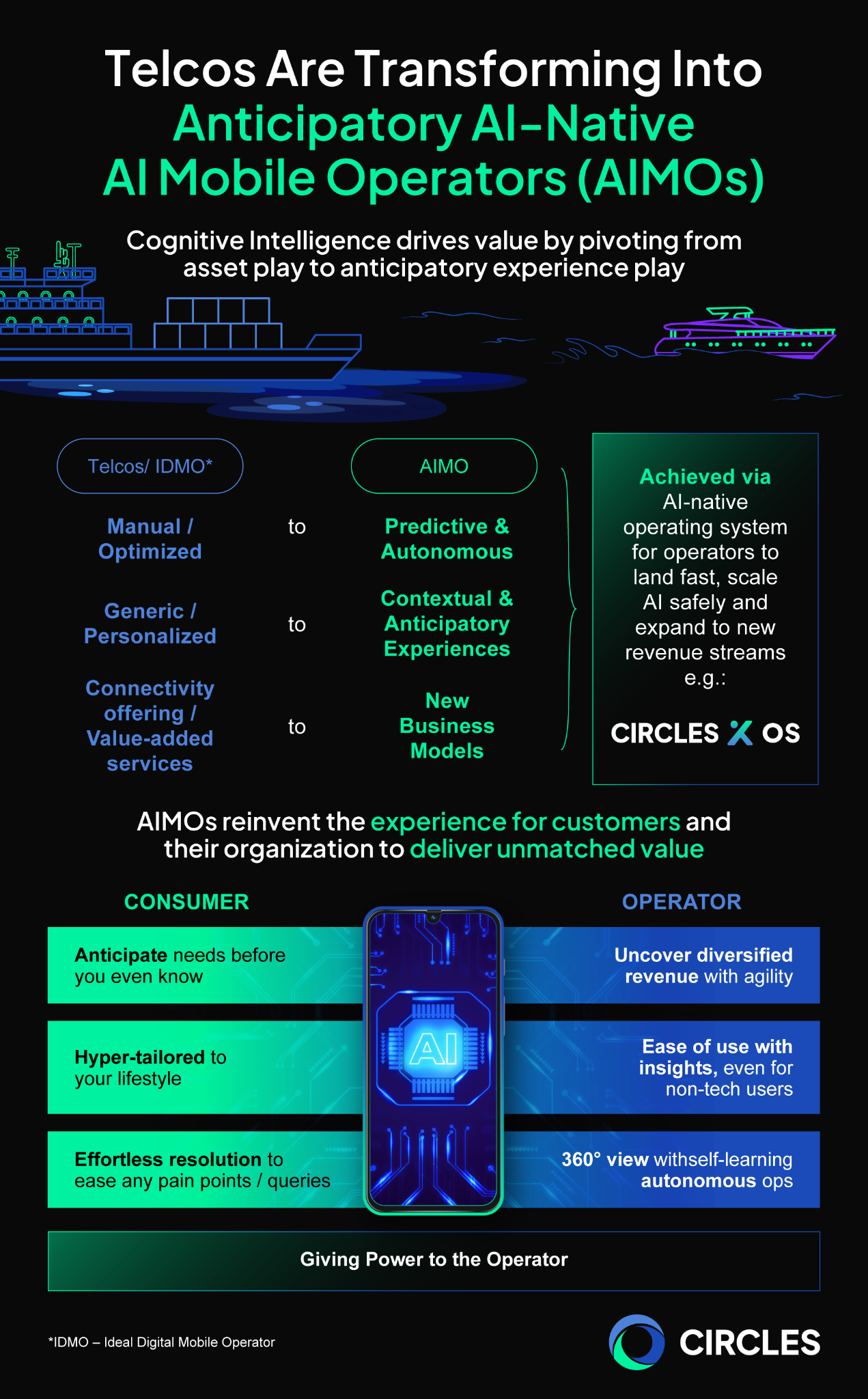
One of the features of Circles software is CareX, our agentic AI customer support system. CareX orchestrates multiple AI agents who can handle subtasks like billing, technical support, and more, while supporting multiple different languages straight out of the box. You can find out more in the video below:
Circles’ AI-powered telco software is built on an AI software platform purpose-built for telecoms while supported by a close collaboration with OpenAI. By collaborating with Circles, you gain access to a partner who has navigated these challenges firsthand, who can empower operators to evolve from connectivity providers into trusted, AI-powered lifestyle enablers that proactively anticipate and meet customer needs.
Contact us below to book a demo of CareX or to find out more about our services.
References:
- MWC 2026: Telecoms at the Inflection Point | Bain & Company
- BCG at MWC 2026
- Global Mobile Trends 2026 | GSMA Intelligence
- State of AI in Telecom 2026 Survey Report | NVIDIA
- Unlocking Impact from Agentic AI in Customer Service
- Nokia accelerates AI-RAN momentum with new partnerships driving path to AI-Native 6G #MWC26