

Insights
8
5
min read
United States Telecommunications Personalization Trends
Making Customer Choices More Relevant
Different Customer Decisions Call for Different Personalization Approaches
Helping Customers Choose a Suitable Plan
Using Customer Context to Make Assistance More Relevant
Giving Customers Control Over the Connectivity Experience
Separating the Buyer's Needs From the User's Controls
Different Customer Decisions Call for Different Personalization Approaches
The United States’ large population allows different brands to cater to sizable niche customer segments, providing more tailored experiences that can sit alongside flagship brands' offers, which target broader markets.
That distinction provides a useful way to examine US telco personalization. As in the earlier Southeast Asia article, this review compares selected customer personalization approaches and the customer situations they address. It focuses on four decisions: how customers reach a suitable plan, how assistance uses their context, which connectivity controls they receive, and who has authority to configure the service.
These examples suggest several options for management to investigate. The value that these approaches can provide depends on matching the approach to the buying task and the telco's delivery capabilities.
Helping Customers Choose a Suitable Plan
One starting point is deciding how much work customers should do to assemble their telco plan. Some telcos give customers more freedom to configure a bundle’s individual components, while others provide guidance to estimate what they need. Simpler packages can also reduce the number of decisions customers need to make.
AT&T and US Mobile Give Customers Different Forms of Control
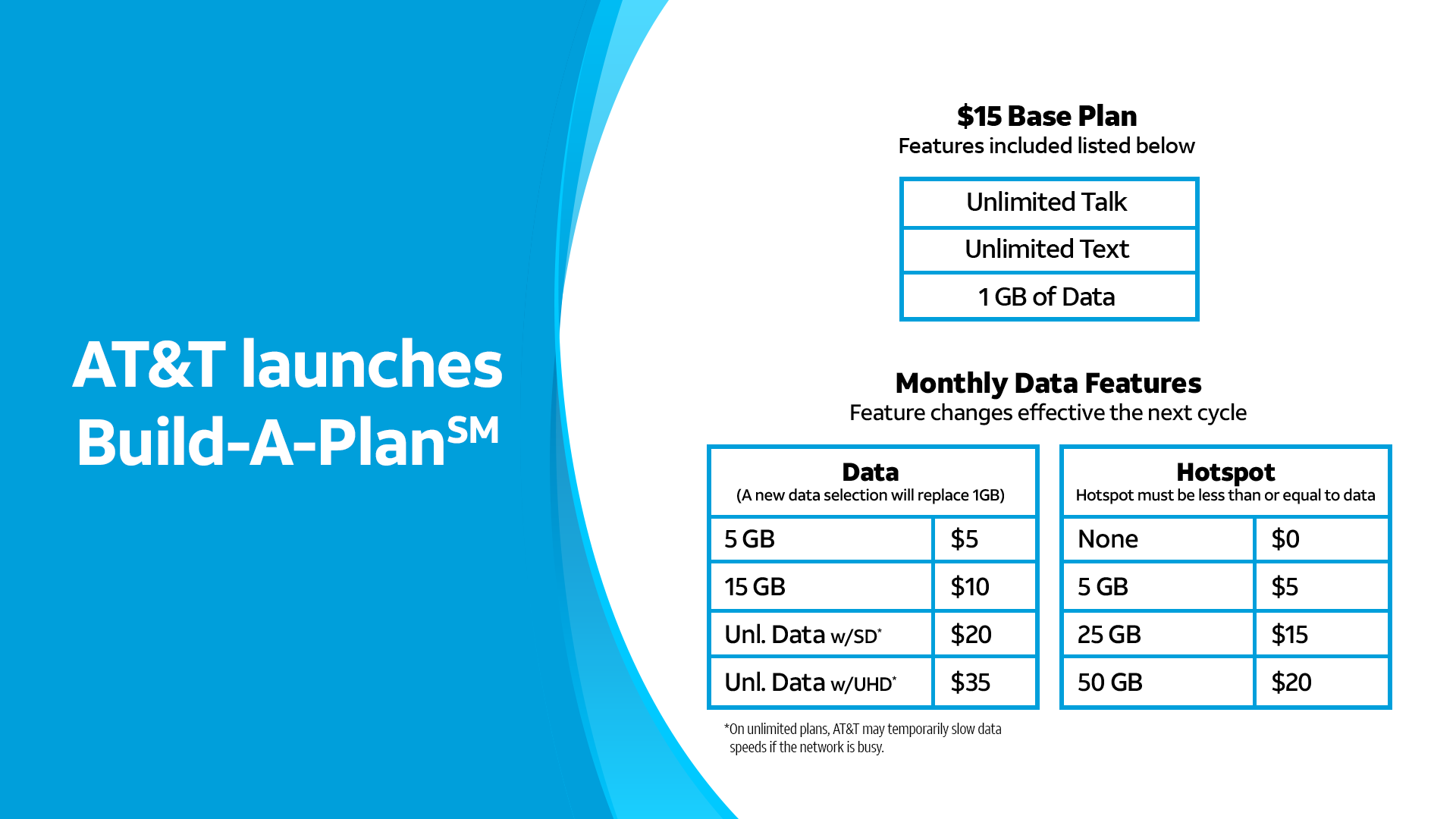
AT&T's Build-A-Plan allows customers to add data and hotspot components to their plan. It starts at $15 a month before taxes and fees, including unlimited talk and text and 1 GB of data, and is a specific entry proposition for a single-line buyer.1
US Mobile's By the Gig plans help to address a different task: managing a shared allowance among a group of users like a household. Customers can choose how much data goes into a shared pool and the number of lines the plan supports, alongside configuring automatic top-ups with spending limits. For a household choosing this offer, the relevant choice becomes how much data to share and how much additional spending to permit.2
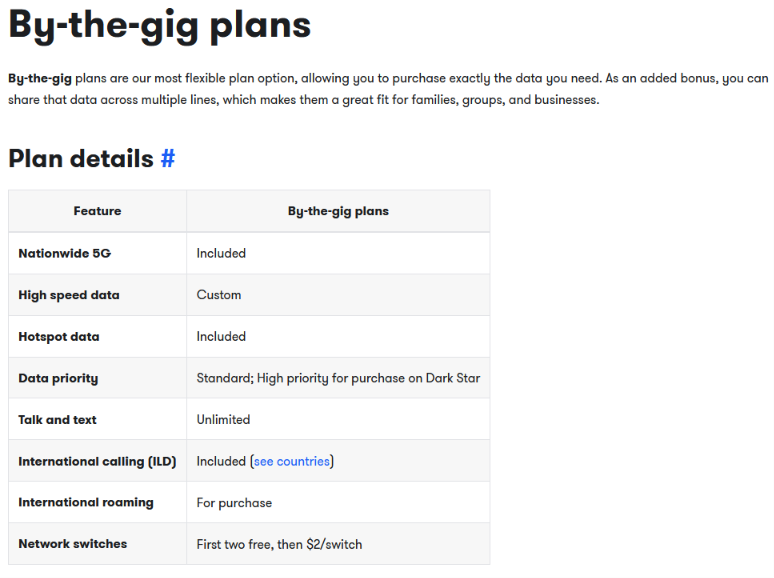
Both approaches offer customer control, but they should be evaluated against different buying journeys. For example, a single-line configurator does not resolve every household's need to coordinate multiple users.
MobileX Uses AI-Powered Usage Guidance to Help Customers Decide
MobileX's NEED A HAND? option uses its AI Forecaster to observe usage for up to ten days and suggest a plan. Customers can choose a custom configuration or an unlimited option and adjust their plan in the app. The learning period excludes mobile hotspot use.3
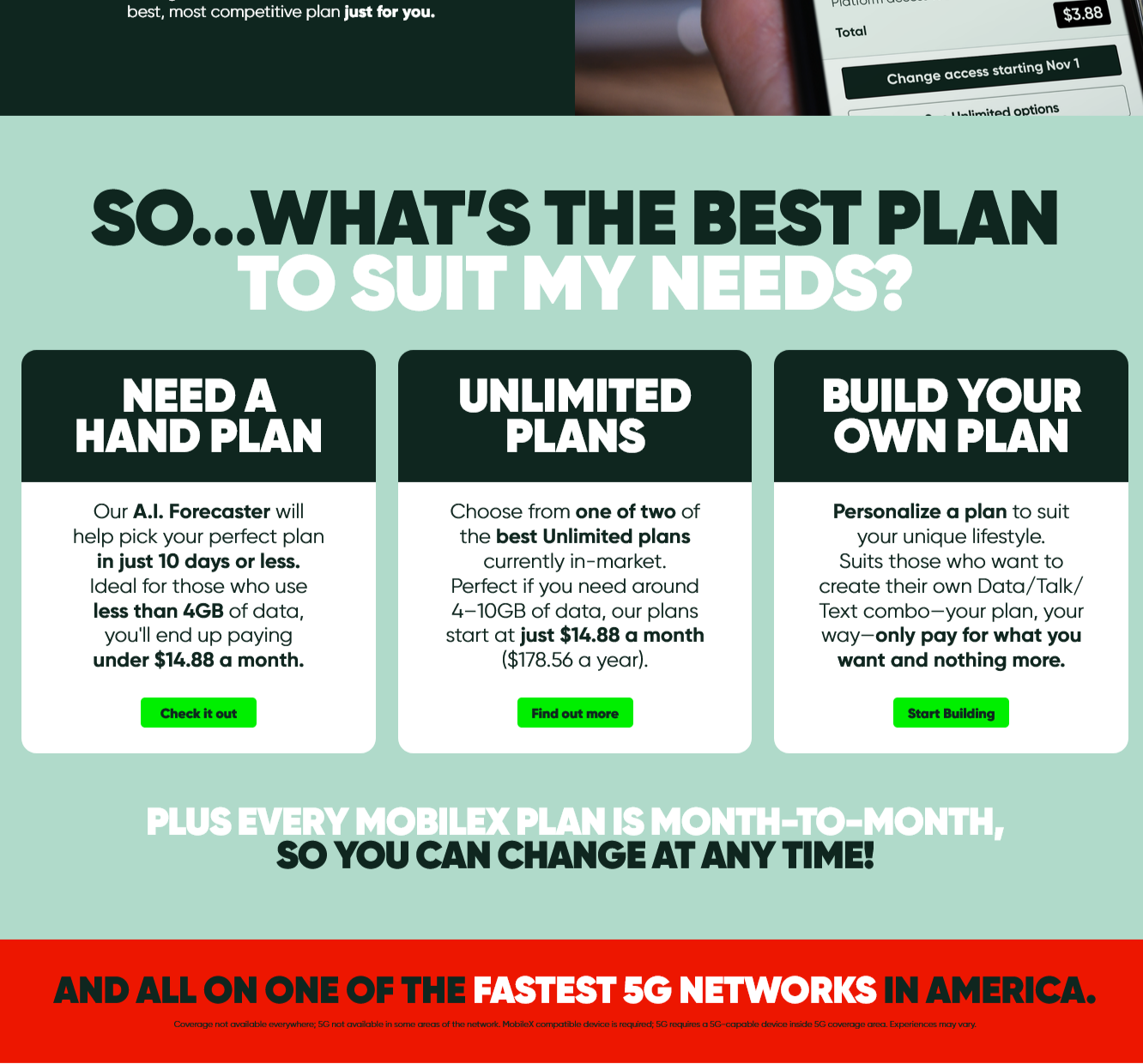
MobileX’s approach addresses the difficulty of estimating plan usage before selecting an allowance. For telcos, this means the strategic question can extend beyond whether a recommendation generates an upgrade: would a telco recommend a smaller allowance when that appears to fit the customer better?
Telcos that are interested in this approach could experiment with keeping the customer in control for longer at this stage. For example, a short observation period may not capture a change in work, travel, or other circumstances, and providing the customer an option to reactivate the observation period could be useful during these periods in their lives.
Verizon’s myPlan Provides More Granular Choices
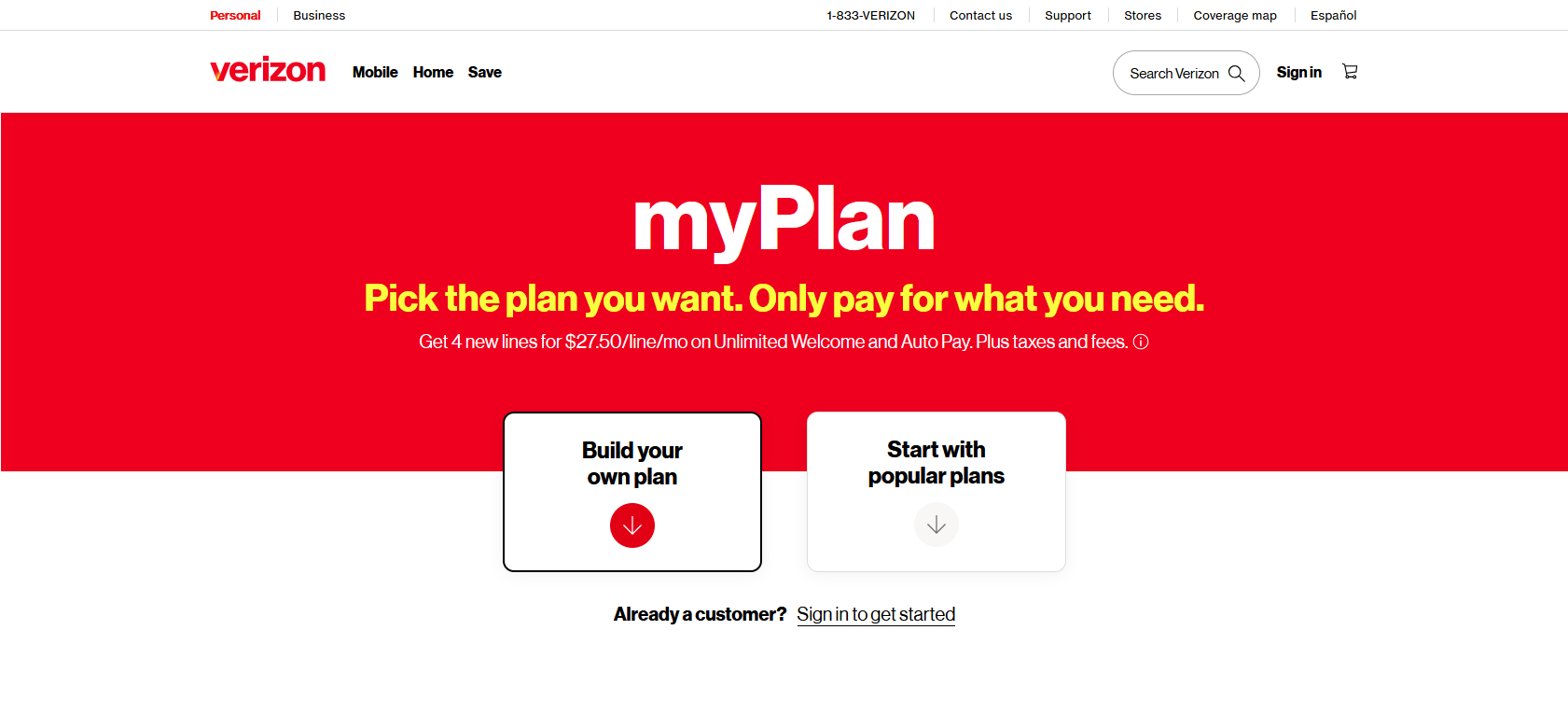
Verizon’s myPlan provides users with more granular control, allowing customers to select how many lines are in the plan and choose from various connectivity tiers, which also include family safety features and enhanced video calling and streaming capabilities. It also includes perks that can be added into the bundle, such as streaming bundles like the For Movies & Show Lovers Bundle, which provides savings for Disney, Hulu, ESPN+, Netflix, and HBO Max; cloud storage; Apple One; and Google AI Pro services.4
Simpler Packaging Offers Another Route to Relevance
On the opposite end of the spectrum, US telcos also provide simpler packages for customers to understand. AT&T OneConnect combines wireless and fiber connectivity in one package,5 while Verizon provides Simplicity and its combined mobile-and-home Verizon One proposition while retaining myPlan.6
These examples show why reducing buying decisions deserves consideration alongside expanding configuration. Management can start by identifying the task customers find difficult:
The tasks above are proposed applications and not measured US customer preferences, as each approach could perform differently depending on the customer segment a telco is targeting. Telcos can compare comprehension, purchase completion, and subsequent plan changes within the relevant customer group. This would help establish whether extra choice solves a problem or adds work.
Using Customer Context to Make Assistance More Relevant
Personalized telco experiences can extend to customer care as well. When a customer contacts a telco for a service issue, giving them the relevant help depends on understanding their situation and boosting the accuracy of staff responses. Selecting an appropriate treatment and retrieving the information needed to deliver it are related investment decisions.
T-Mobile Uses Context to Support Care Decisions
In a 2024 PegaWorld presentation hosted by T-Mobile’s implementation partner Pega, T-Mobile's Jeff Frantz described its Customer Decision Hub system that they use to improve customer service experiences. The system uses information about products, lines, devices, customer behavior, and the reason for contacting care and then presents treatments and supporting context to agents.7
Frantz’s speech also reported improvements in first-call resolution, Net Promoter Score, churn, and agent performance, without disclosing numerical results. He also mentioned a future ambition at the time of proactively acknowledging a poor network experience and offering compensation to improve customer experiences, which may not currently reflect what the current experiences they offer.7
One useful management question that arises here is identifying which response fits the interaction. Customer context can inform troubleshooting, an explanation, a service treatment, or an offer. Management needs to define when resolving the original issue takes priority over selling.
Verizon's Reported Sales Result Concerns a Broader Service Program
In an April 2025 Reuters interview, Verizon Consumer's CEO said:8
Verizon’s AI deployment, which also involved reskilling care agents for selling, began in July 2024 and reached full scale in January 2025.
Alongside the AI reskilling, Verizon worked closely with Google to develop AI capabilities to enhance its customer service experiences. Google Cloud's implementation release describes a research assistant that supplies context-aware answers and a separate problem-solving tool for troubleshooting. These capabilities help explain the workflow behind the reported result.9
One note of caution when reading these numbers, however, is that the nearly 40 percent figure is a management-reported service-channel sales increase. It does not measure company revenue growth or isolate the effect of personalized recommendations from agent assistance and reskilling.
For telcos considering investments into AI and reskilling, the first focus is identifying where the main constraint sits. For example, if staff struggle to find answers, focusing on assistance is a good place to start. If they can access the information but struggle to choose the right response, decisioning will take priority. Some telcos may need to focus on both at the same time.
An internal evaluation could examine resolution and repeat contact alongside offer acceptance and sales. That would help management judge whether the interaction became more useful to the customer as well as more productive for the telco.
Giving Customers Control Over the Connectivity Experience
As was seen in the Southeast Asian and European examples, personalization can also extend to customers’ connectivity experiences. Here, management needs to distinguish between changing the underlying network and adjusting performance within an existing connection.
US Mobile and Cape Offer Different Forms of Network Choice
US Mobile lets customers transfer their primary line between Warp, Light Speed and Dark Star networks, which are each provided by different major mobile network operators. Its support guide positions the choice of changing networks as a longer-term choice, with transfer limits and a possible pause in service.10
For customers who travel around the United States and need the benefits of different networks in different areas, US Mobile’s multi-network solutions allow customers to have two or three networks on the same plan.
Cape's Preferred Network feature places more of the ongoing work with the service. As Cape mentions:
Cape’s example shows why this distinction matters for telco product design. In this case, a lasting primary-network change, additional network lines and preference-based fallback involve different customer actions and technical arrangements. Telco management should establish which experience it can support before deciding how much control to expose in the app.
Activity Priorities Address a Different Experience Problem
US telcos also give customers the option to adjust their connectivity quality depending on which activities they are doing at the time. AT&T’s Wi-Fi Personalization lets their customers prioritize work, gaming, or streaming via their Smart Home Manager or let AI adapt priorities at the home gateway.
AT&T, in its December 2026 statement, announced that All-Fi Pro customers and AT&T customers who combine fiber and wireless get this feature at no additional cost. However, one thing to note is that this feature concerns home Wi-Fi instead of a cellular network slice.12
For mobile customers, AT&T Turbo is an optional performance add-on for eligible plans and devices. It adds no data and excludes voice, messaging, roaming, and Wi-Fi, and normal data-management rules still apply.13 Verizon's Unlimited Ultimate also includes enhanced video calling in select 5G Ultra Wideband areas, subject to compatible devices, operating systems, and participating apps.14
These examples provide different ways to package experience controls: included functionality, an optional add-on, or a premium-plan benefit. One thing to note is that they do not provide a common performance comparison or establish what customers would pay for an individual capability.
For telco leaders, the starting point when considering premium connectivity is selecting the experience problem to be solved: coverage in a particular location, competing household activities, or performance during a supported task. The next decision in the matter is whether the remedy requires network access, service configuration, or automation. Those delivery requirements determine what another telco can realistically reproduce.
Where customers need a remedy only occasionally, a simple control may be sufficient. Where the need changes repeatedly, automation may reduce effort. Telcos could assess setup completion, continuing use and whether the original problem persists before expanding the proposition.
Separating the Buyer's Needs From the User's Controls
A further form of personalization concerns who can make decisions in cases where the user and decision maker are separate people. For example, when a parent buys a child's phone service, the buyer, administrator, and user are different people.
Troomi's Parent Portal lets parents configure approved contacts, apps, schedules and access, with options to introduce more functionality over time.15 A Troomi phone is required because its software is integrated into the hardware.
This parental control approach illustrates a specialized proposition built around the parent's authority and the child's access. It raises an earlier strategic choice than which settings to add: does the telco want to serve this particular family need, and can it sustain the device, setup and support responsibilities involved?
A telco exploring this direction would need to decide which choices belong to the paying parent, what the child can change independently and how access should evolve. Testing could examine whether parents understand the permissions and can maintain them without excessive support. Do note that Troomi's product documentation establishes the controls available; it does not establish segment demand or child-safety outcomes.
Making Relevance a Clear Management Choice
These US examples discussed above show several ways to make the core telco relationship more relevant for customers, showing different ways that customers can:
For management, the strongest starting point is a specific decision customers find difficult. This helps determine whether to offer more control, simplify the proposition, improve recommendations, or automate a recurring task. It also identifies the capabilities required to deliver the experience consistently.
The next step is to evaluate both customer usefulness and commercial value. User comprehension, successful setup, resolution, and continuing use can help explain whether the tested approach works in practice. Sales conversion, retention, and contribution after delivery and support costs can then inform whether it merits expansion. These are proposed measures that telcos can investigate, rather than outcomes established across the cases reviewed here.
This article focuses on making connectivity choices and experiences more relevant. Stay tuned for Circles’ next article that will focus on US bundling and beyond-connectivity and examine a related decision: deciding which additional services belong in that customer relationship and how telcos can make them useful and manageable.
About Circles
Founded in 2014, Circles is a global technology company reimagining the telco industry with its innovative SaaS platform, empowering telco operators worldwide to effortlessly launch innovative digital brands or refresh existing ones, accelerating their transformation into techcos.
Today, Circles partners with leading telco operators across 14 countries and 6 continents, including KDDI Corporation, Etisalat Group (e&), AT&T, and Telkomsel, creating blueprints for future telco and digital experiences enjoyed by millions of consumers globally.
Circles is backed by renowned global investors, including Peak XV Partners (formerly Sequoia), Warburg Pincus, Founders Fund, and EDBI (the investment arm of the Singapore Economic Development Board), with a track record of backing industry challengers.
To learn more about how Circles enables digital transformation for leading telcos worldwide, contact us below:
*Source note: This article draws on selected public consumer product documentation, operator presentations and implementation materials, plus a Reuters interview. It builds on the supplied research brief, with the cited product pages and consequential claims rechecked on October 21, 2026. Historical presentations and reported results retain their original dates. This is a comparison of approaches, rather than an exhaustive market census; the customer situations and proposed evaluations are editorial analysis, not primary research.*
References:
- Build Your Own Plan | Customize Wireless from AT&T
- By-the-gig plans | US Mobile Help Center
- All FAQs - MobileX
- myPlan: Best Unlimited Cell Phone Plans | Verizon (accessed 26th October 2026)
- AT&T OneConnect | Flat Price Wireless & Internet for All Your Devices
- Verizon breaks industry mold to put customers first
- T-Mobile's 2024 PegaWorld presentation and transcript
- Verizon says Google AI for customer service agents has led to sales jump | Reuters
- Google Cloud and Verizon Drive Customer Experience Improvements for Verizon Customers with Gemini Integration - Apr 9, 2025
- US Mobile network-transfer guide
- Multi-Network Coverage: Preferred Network Selection – Cape
- Stay Connected Your Way with the First AI-Powered Personalized Wi-Fi
- Add or Remove AT&T Turbo - AT&T Wireless Customer Support
- myPlan: Best Unlimited Cell Phone Plans | Verizon
- How Troomi Works: A Kids Phone That Grows with Them | Troomi Kid-safe Smartphones