

Knowledge Hub
5
min read
The MVNO Imperative: Why Retailers Need a Mobile Play
In a hyper-competitive retail landscape, securing and maintaining customer loyalty is becoming more challenging. Retailers have invested heavily in loyalty programs to encourage customers to shop more frequently, spend more, and remain connected to the brand. Points, discounts, cashback, and exclusive offers have become standard tools for building stronger customer relationships.
But loyalty is becoming harder to win.
To build true customer stickiness, you need to integrate your brand into your customers' daily lives. That integration already exists in the palm of your customer's hand: their smartphone.
Launching a Mobile Virtual Network Operator (MVNO) or telco sub-brand allows you to transform mobile connectivity from an external utility into a powerful brand asset. By bundling mobile service directly with your existing retail offering and loyalty ecosystem, you can build a predictable recurring revenue stream, increase store foot traffic and basket size, and gain customer insights.
Mobile connectivity is no longer just for traditional telecommunications companies. It has become a strategic imperative for modern retailers.
Loyalty needs to become more than points
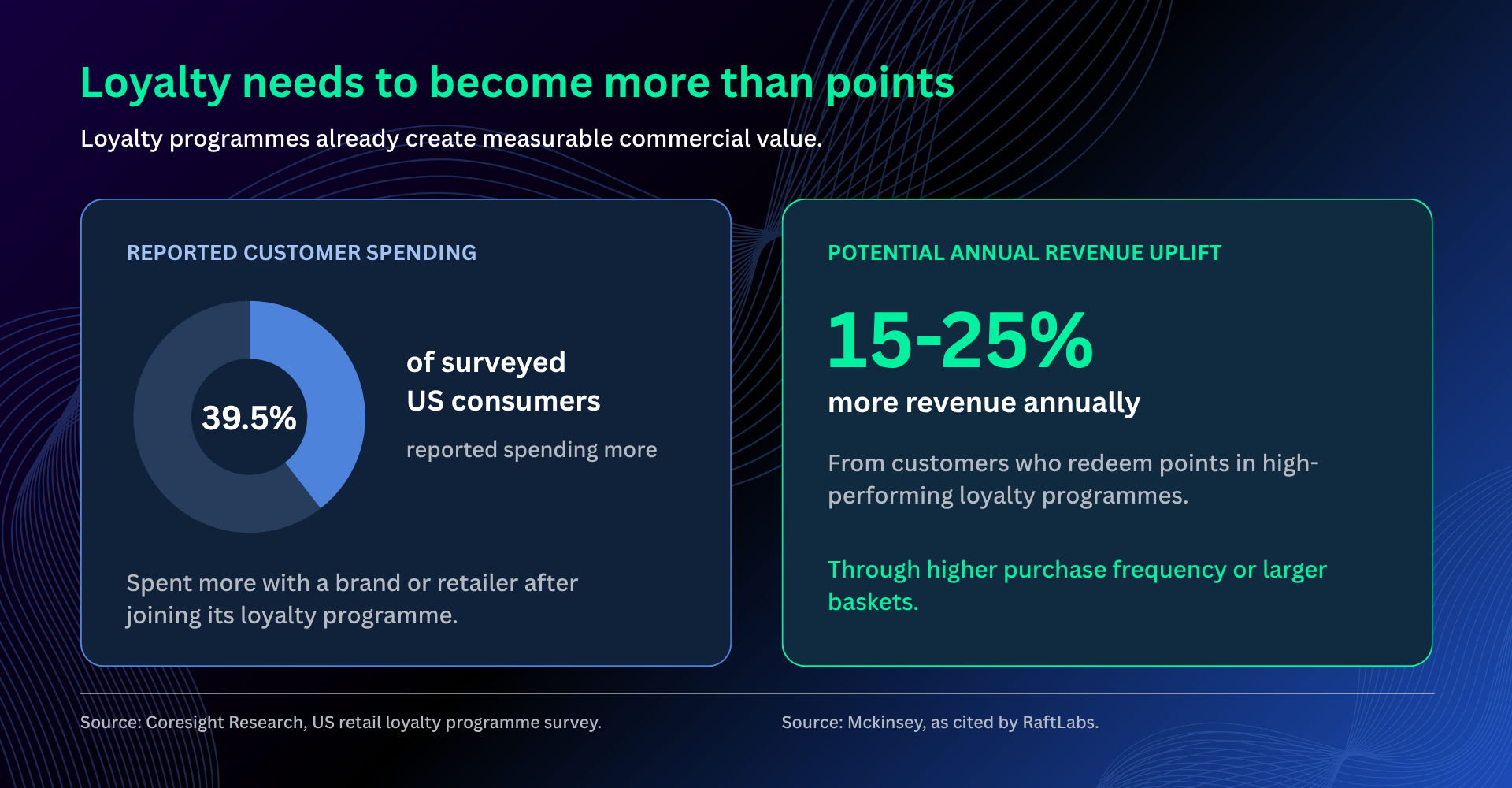
Retail loyalty programs are already valuable commercial assets. Coresight Research found that 39.5% of surveyed US consumers reported spending more with a brand or retailer after joining its loyalty program. McKinsey has similarly found that high-performing loyalty programs can increase revenue from customers who redeem points by 15% to 25% annually, through higher purchase frequency or larger baskets.
The challenge is that many loyalty programs remain fundamentally transactional. Customers buy something, earn points, and eventually redeem them.
Mobile changes this dynamic.
A grocery purchase may happen once or twice a week. A fashion purchase may happen monthly. A mobile subscription, however, is an ongoing relationship. Customers interact with their mobile service every day — through calls, messaging, apps, payments, data consumption, and customer service.
This makes mobile an unusually powerful loyalty anchor.
Instead of asking customers to remember to engage with a loyalty program, the retailer can make the mobile service itself part of the everyday relationship.
Mobile can turn loyalty into a recurring relationship
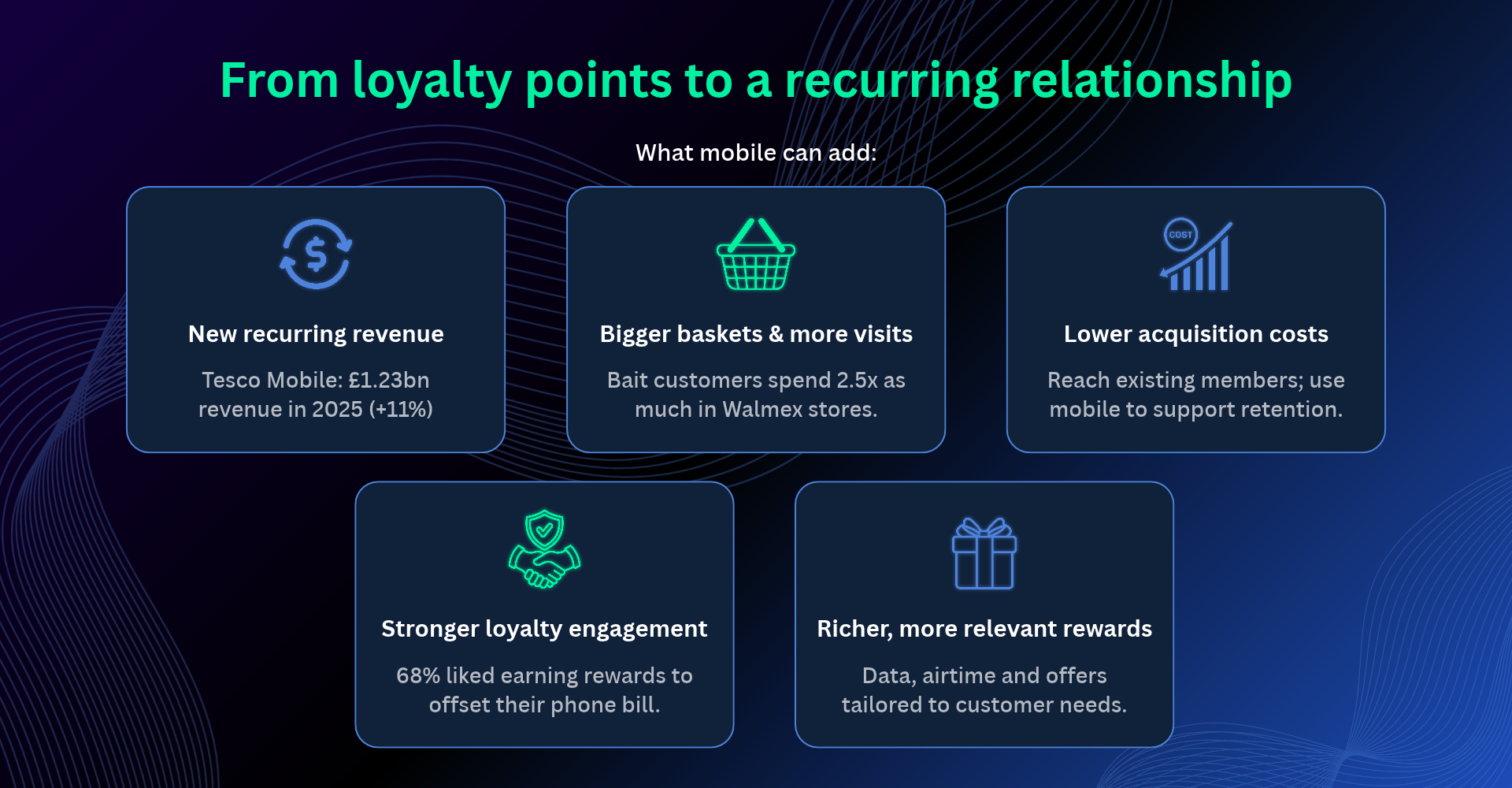
Consider a retailer with millions of loyalty members. Even if only a small percentage adopt its mobile proposition, the retailer can create a new recurring revenue stream alongside its traditional retail business.
This impact manifests in several ways:
Supercharging Customer Loyalty
Beyond the direct financial benefits and revenue diversification, an MVNO fundamentally transforms the psychological relationship between you and the consumer. It elevates the brand from a mere shopping destination to an essential life enabler.
Living in the Customer's Pocket
Every time a customer looks at their smartphone, they see your network name proudly displayed in the top corner of their screen. This provides unparalleled, continuous brand visibility that money simply cannot buy. Your app becomes a central hub not just for shopping, but for checking daily data usage, paying monthly bills, and managing a vital daily utility.
Gamifying the Everyday Experience
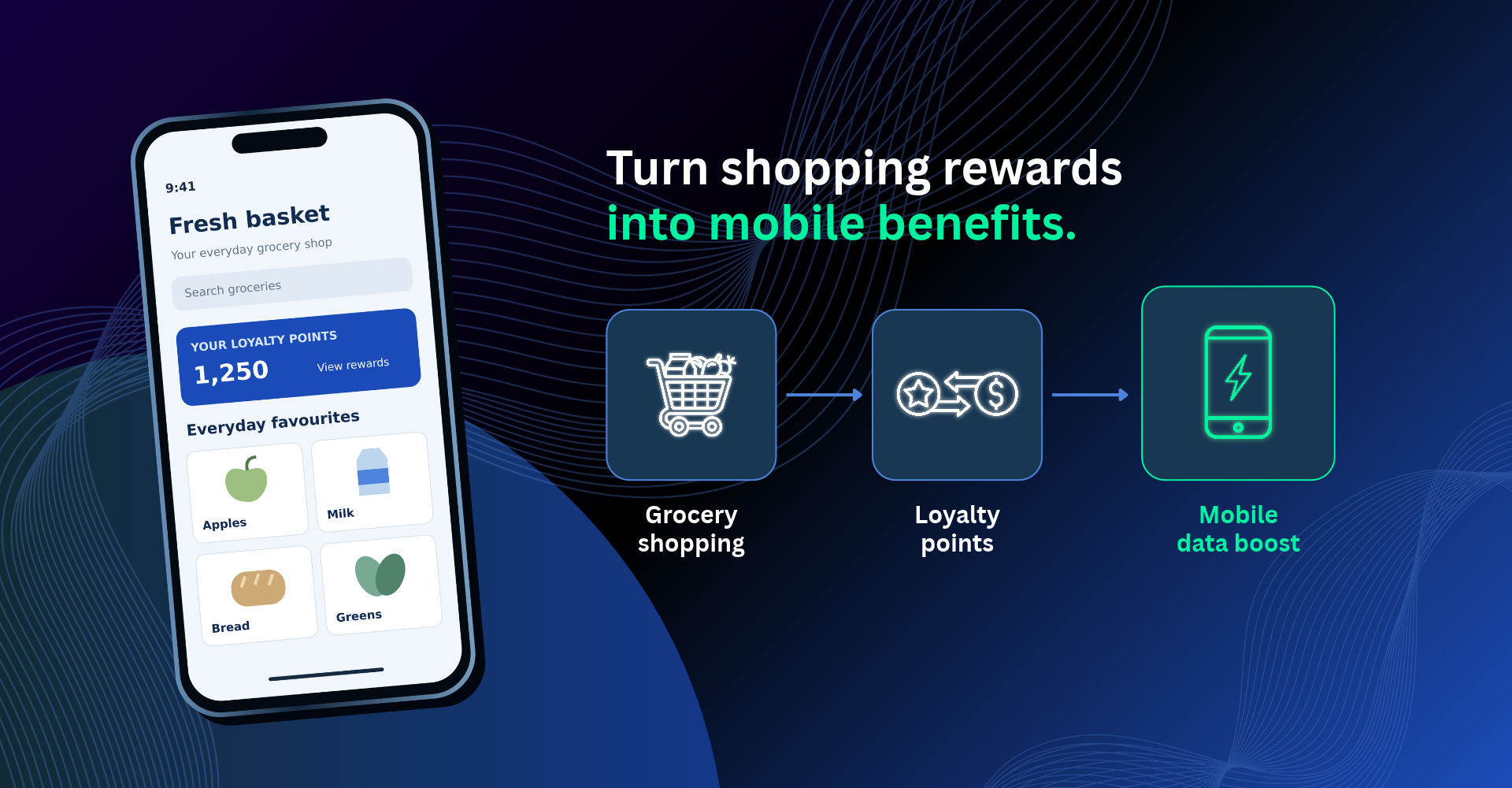
Bundling mobile services with loyalty programs allows you to gamify both experiences in ways that matter to the consumer. Traditional retail points can often feel abstract and unrewarding. However, telco rewards offer immediate, tangible value. Imagine a loyalty program where grocery points can be instantly converted into a data boost during a long commute, or where achieving a "Gold" loyalty status grants the user free international data roaming for their next family vacation. These are high-perceived-value rewards that delight the customer immensely.
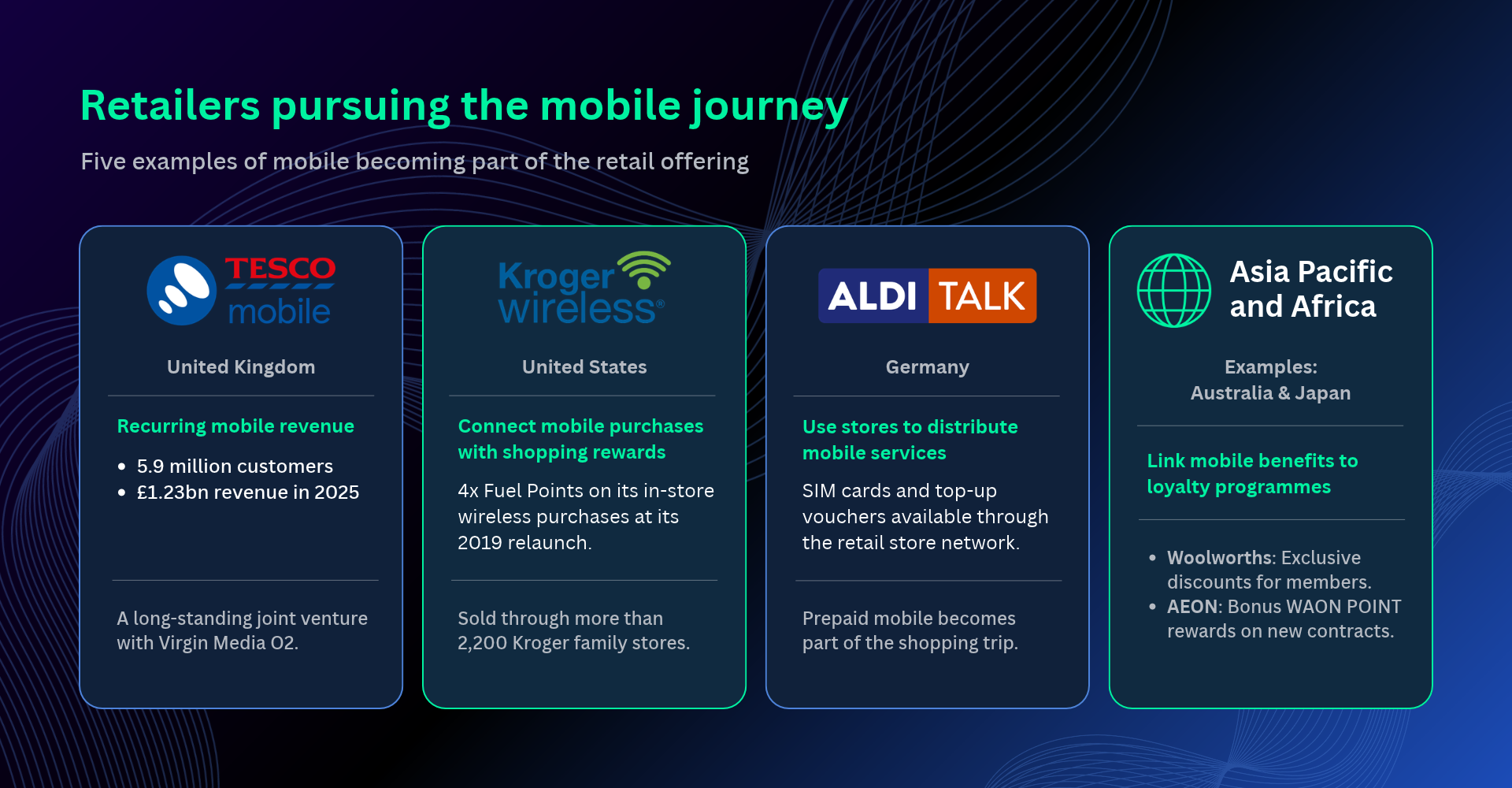
Proof: retailers pursuing the mobile journey
Overcoming the Operational Hurdles
Historically, the idea of a retailer becoming a telecommunications provider seemed impossibly complex and fraught with risk. The traditional telco technology stack is notorious for its rigid legacy systems, incredibly complex billing engines, and heavy regulatory compliance requirements.
However, the technology landscape has evolved dramatically in recent years. Today, the rise of modern Mobile Virtual Network Enablers (MVNEs) and Telco-as-a-Service (TaaS) platforms has entirely removed these historical barriers to entry.
Modern telco platforms are entirely cloud-native, API-driven, and highly modular. They provide comprehensive "telco-in-a-box" solutions that handle the heavy lifting: from complex usage-based billing and eKYC (Electronic Know Your Customer) compliance to multi-channel customer support and CRM integration. With these advanced platforms, launching a mobile brand is no longer a multi-year IT infrastructure nightmare; it is a streamlined digital initiative.
You can focus entirely on what you do best—brand building, customer acquisition, and retail loyalty management—while the SaaS platform quietly and securely handles the telecommunications complexities in the background.
The next evolution of retail loyalty is connectivity
The transition from a traditional retailer to a dynamic retail-telco ecosystem is a bold, forward-thinking move, but it promises great rewards in both revenue growth and customer loyalty. However, successfully executing this ambitious vision requires the right technology partner—one that intimately understands both the agility of modern digital brands and the deep complexity of global telecommunications.
This is where Circles change the landscape.
As a global technology leader powering modern digital telcos across the globe, Circles enables retailers to launch their own branded MVNO in a fraction of the traditional time and at a cost-effective scale. Through our cloud-native, SaaS-based platform, we handle the heavy lifting—from network integration, billing, and order management to AI-driven customer support and digital onboarding. With open APIs, Circles integrates directly into your existing retail mobile app and loyalty platform, allowing you to offer embedded connectivity without building a telecom company from scratch.
By partnering with Circles, you can transform your brand from a traditional retail destination into a modern digital ecosystem. The opportunity to own the mobile pipe and the retail basket simultaneously is here, and the time to launch your retail MVNO is now.
Curious about how we can help you?
Contact us today or sign up for a demo.