

Knowledge Hub
5
min read
Circles vs Netcracker Agentic AI Solution: Comparing Full-Stack Transformation and Agentic Capabilities
The Complete Guide to Telecom Agentic AI Deployment Models
Circles and Netcracker both present AI-native propositions for telecom operators. This comparison examines product scope, integration and delivery responsibilities, with Circles' operator-led Full-stack approach as the basis for evaluating fit.
What Are the Types of Telecom Agentic AI Deployment Models?
Operators choosing an agentic AI deployment model are choosing between a full-stack AI-native platform (Circles) and ready-to-deploy agents layered across an existing digital portfolio (Netcracker), the two dominant models competing for the same transformation budget.
Key Differences: Circles vs Netcracker Explained
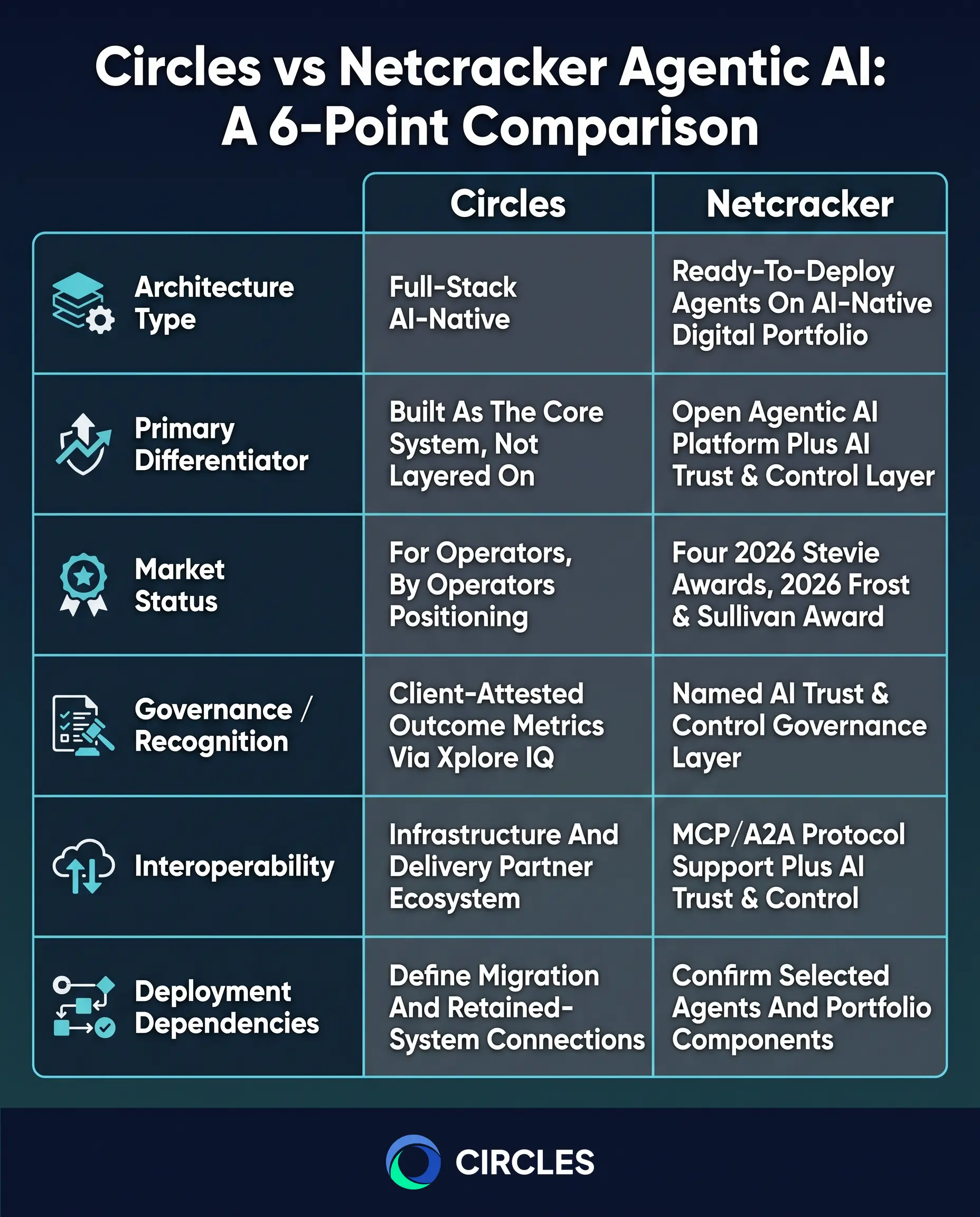
Circles synchronises a full-stack, AI-native platform with an operator's transformation from day one; Netcracker orchestrates Ready-to-Deploy AI Agents through an Open Agentic AI Platform layered across its existing AI-Native Digital Portfolio. Netcracker's own materials describe agents as deployed "across" the digital portfolio.
Performance
Use the T-Mobile announcement to establish the named BSS/GenAI relationship (a February 2024 release extending Netcracker's BSS and managed-services relationship with T-Mobile, including planned GenAI features). Use deployment-specific evidence, with its measurement context, when assessing agentic-AI performance. Circles' operator experience is central to its Full-stack proposition. Confirm the selected platform's capabilities and migration requirements against the intended operating model. Historical research (McKinsey, 15% churn reduction for AI-driven retention generally) provides context; it does not establish which of these platforms produces better results.
Resource
Define each platform's interfaces to retained systems, network services and external partners. Confirm the protocols and responsibilities included in the proposed implementation. Implementation effort includes configuration, integration, data readiness and change management. For each proposal, identify retained-system dependencies, migration sequencing and governance responsibilities, then test the critical workflows before rollout.
Architecture
Netcracker Agentic AI Solution adds agentic capability to an existing digital portfolio. Circles offers a Full-stack, AI-Native proposition. Compare the data flows, execution boundaries and implementation responsibilities of the selected products.
What Is the Difference Between Circles and Netcracker's Agentic AI Solution?
Circles' operator experience is central to its Full-stack proposition. Confirm the selected platform's capabilities and migration requirements against the intended operating model. Netcracker's Agentic AI Solution deploys Ready-to-Deploy AI Agents across an existing AI-Native Digital Portfolio; confirm the specific components and integration scope for the proposed deployment.
Which Type Is Right for Your Situation
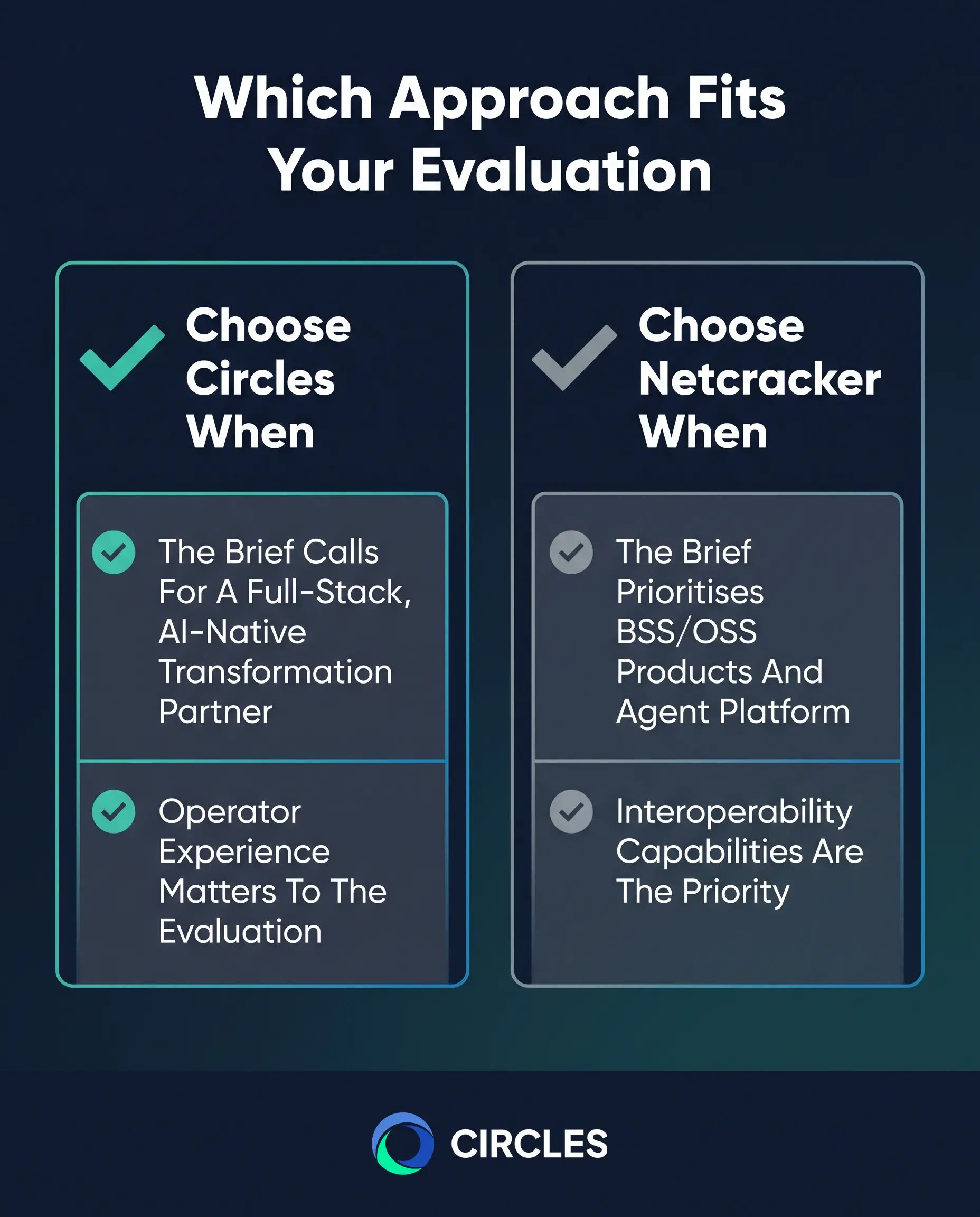
Evaluate Netcracker when: the brief prioritises its BSS/OSS products, agent platform and interoperability capabilities.
Evaluate Circles when: the brief calls for a Full-stack, AI-Native transformation partner with operator experience. For a single-domain project, compare the relevant product scope and commercial proposal.
When Should You Choose Circles Over Netcracker?
Evaluate Circles when the brief calls for a Full-stack, AI-Native transformation partner. Evaluate Netcracker when the brief prioritises its agent platform and interoperability capabilities; confirm the specific portfolio components and any existing estate as part of that evaluation.
Compatibility and Integration
Are Circles and Netcracker's Agentic AI Solution Compatible with the Same Operator Environments?
Both can be deployed by telecom operators broadly. Confirm the specific product scope, integration requirements and any existing estate as part of the evaluation for each.
How Each Approach Can Fail, and How to Prevent It
Implementation effort includes configuration, integration, data readiness and change management. For each proposal, identify retained-system dependencies, migration sequencing and governance responsibilities, then test the critical workflows before rollout.
Why Might a Telecom Agentic AI Deployment Fail?
A deployment fails when configuration, data readiness, migration sequencing or governance responsibilities are not identified and tested before rollout, regardless of architecture.
The Full-Stack Choice for AI-Native Transformation
Operators evaluating a Full-stack, AI-Native transformation partner are the audience Circles is built for. Explore the full AI in Telecom pillar, or see the equivalent comparison against Amdocs Cognitive Core.