

Knowledge Hub
8
5
min read
Customer Experience as a Revenue Strategy: How Telcos Can Turn Better Experiences into Business Growth
For years, telecom operators have competed on network coverage, connection speeds, data allowances, and pricing. These still matter. But as connectivity becomes more widely available, competing on network performance alone is becoming harder. Customers now expect more. They want services that work, bills they understand, and support that resolves problems without wasting their time.
This creates an opportunity for you to compete on something beyond connectivity: customer experience.
Customer experience (CX) is often treated as a support function, measured through satisfaction surveys and call centre performance. But its commercial value goes much further. Every interaction, from signing up for a mobile plan to resolving a billing issue, can influence whether a customer stays, spends more, or takes their business elsewhere.
By making CX part of your revenue strategy, you can strengthen loyalty, create new sales opportunities, and build a more sustainable competitive advantage.
1. Make Every Customer Interaction Count
Customers judge their telecom provider through everyday experiences. These include activating a SIM, understanding a bill, changing a plan, reporting a network issue, or getting help from customer support.
Even routine tasks can become frustrating. Research from Ericsson ConsumerLab found that smartphone users needed an average of 2.2 attempts and 4.1 days to complete an interaction with their telecom provider. Its findings also highlighted the importance of resolving customer issues quickly.
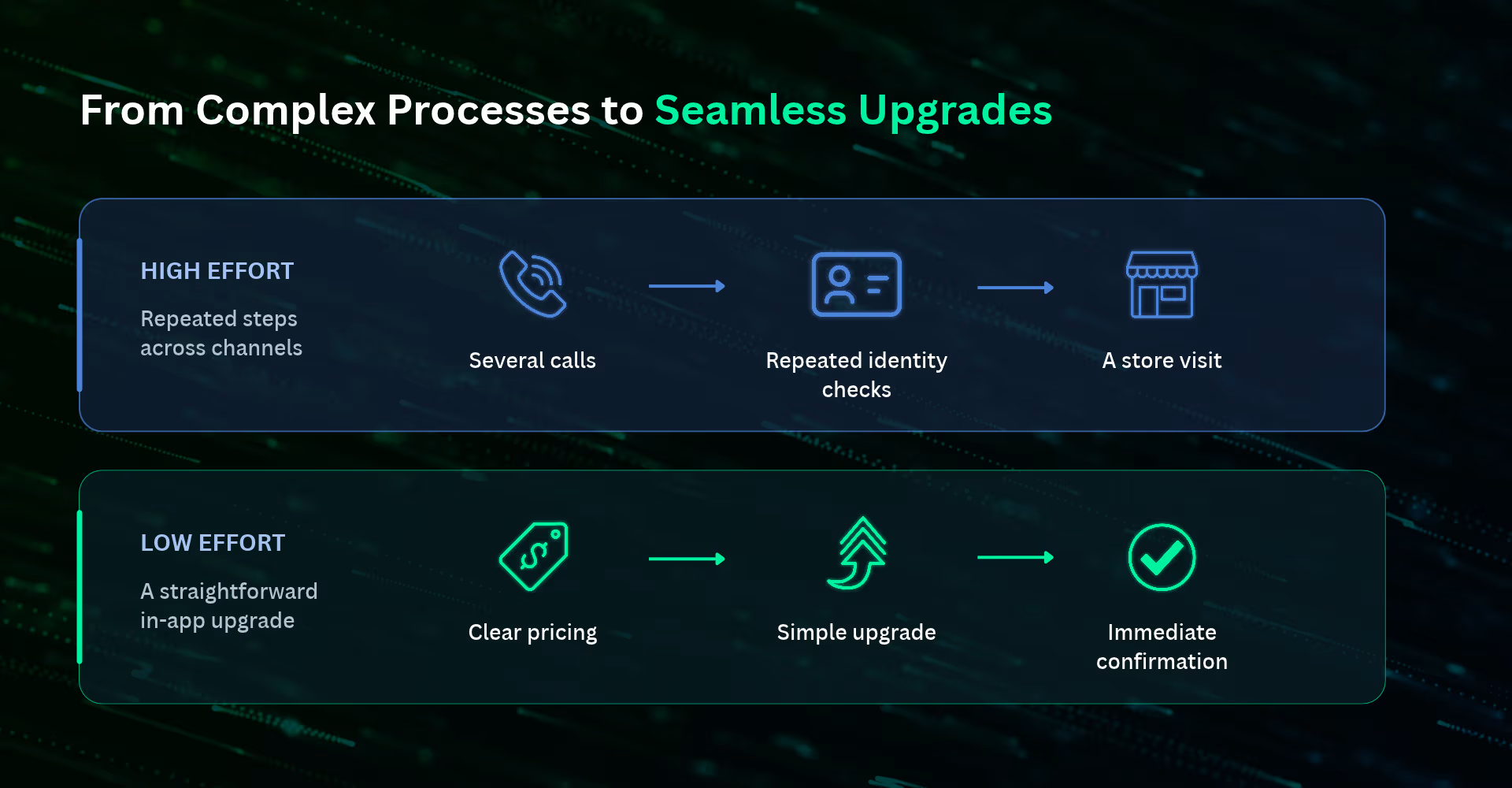
Consider a subscriber who wants to upgrade their data plan. If the process requires several calls, repeated identity checks, and a store visit, the experience creates unnecessary friction. An app that offers clear pricing, a straightforward upgrade process, and immediate confirmation makes the same transaction much easier.
The benefit goes beyond convenience. When customers can complete tasks effortlessly, they have fewer reasons to consider alternatives.
2. Use Personalization to Create Relevant Revenue Opportunities
Customers receive countless promotions every day. Another generic offer for extra data or a discounted subscription may do little to capture their attention.
Personalization changes the conversation. Instead of asking which promotion to send, ask what the customer actually needs.
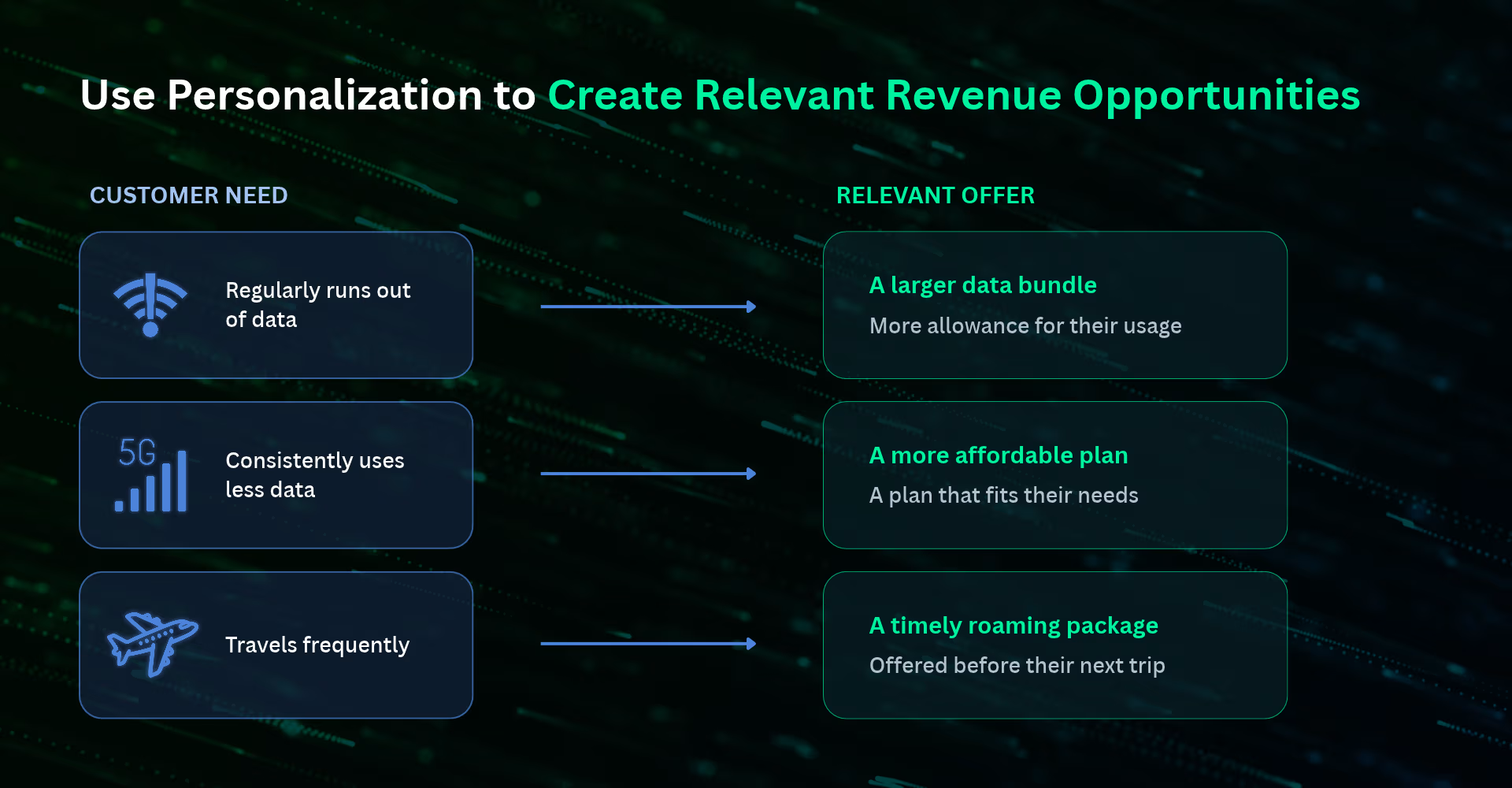
A subscriber who regularly runs out of data may benefit from a larger bundle. Someone who consistently uses less than their monthly allowance might prefer a more affordable plan. A frequent traveller may appreciate a roaming package offered before their next trip.
Philippine operator Globe Telecom provides an example of how data can support more relevant marketing. In a customer story published by Snowflake, Globe described how it used a unified data platform and AI-powered personalization to improve campaign performance. The company reported a 200% increase in campaign take-up and efficiency, while monthly customer engagements through its next-best-offer engine grew from around 3-4 million to more than 10 million.
The lesson is that customer data can help you identify opportunities and deliver offers that are more relevant. But personalization must genuinely serve customer needs. Too many messages or poorly targeted promotions can quickly become irritating.
3. Turn Customer Loyalty into a Retention Strategy
Acquiring a subscriber is only the beginning. The real challenge is giving that customer a reason to stay.
In competitive markets, customers can compare prices and switch providers more easily than before. A cheaper plan from a competitor may be tempting, particularly when the existing provider has given them little reason to remain loyal.
Customer experience can change that equation. Imagine a subscriber experiencing repeated network problems. If you wait for another complaint before responding, the customer may already be considering a switch. If you identify the issue, explain what is happening, and provide a realistic resolution timeline, you have an opportunity to preserve trust.
A good example comes from a Middle Eastern telecom operator that worked with customer experience company TTEC to address rising customer churn.
The operator, which was not named, introduced a predictive churn model that analyzed customer behavior and identified subscribers at risk of leaving. It then used this information to develop targeted retention offers based on individual customer needs and reasons for dissatisfaction. Dedicated retention teams also followed up with customers to address their concerns.
According to TTEC's case study, the operator reduced its combined prepaid and postpaid churn rate by 50% and increased renewal rates by 15% within the first year. Its revamped retention program also tripled save rates.
The example demonstrates how understanding customer behavior and addressing concerns before subscribers leave can turn customer retention into a measurable business outcome.
4. Make Digital Service Convenient, Not Complicated
Mobile apps, chatbots, and self-service portals allow customers to check usage, pay bills, manage subscriptions, and seek assistance without visiting a store. But adding digital channels does not automatically create a better experience.
According to J.D. Power's 2026 U.S. Telecom Digital Experience Study, overall digital experience satisfaction scores were 654 out of 1,000 for wireless carriers and 659 for internet service providers. The findings highlight the importance of making digital interactions work well.
A useful app should make common tasks easier. Customers should be able to understand their bills, change plans, and troubleshoot basic problems without navigating confusing menus. If an automated assistant cannot resolve an issue, customers should be able to reach a human agent without starting over.
Research from the Qualtrics XM Institute also found that digital channels were particularly popular among Asian consumers, while chatbots were the least preferred option overall in its global survey.
The takeaway is simple: digital-first should not mean digital-only. Customers need convenient self-service, but they also need human support when situations become complicated.
5. Use AI to Anticipate Customer Needs
Artificial intelligence is creating new opportunities to move beyond reactive customer service. Instead of waiting for complaints, providers can use AI and analytics to detect problems, anticipate needs, and recommend appropriate actions.
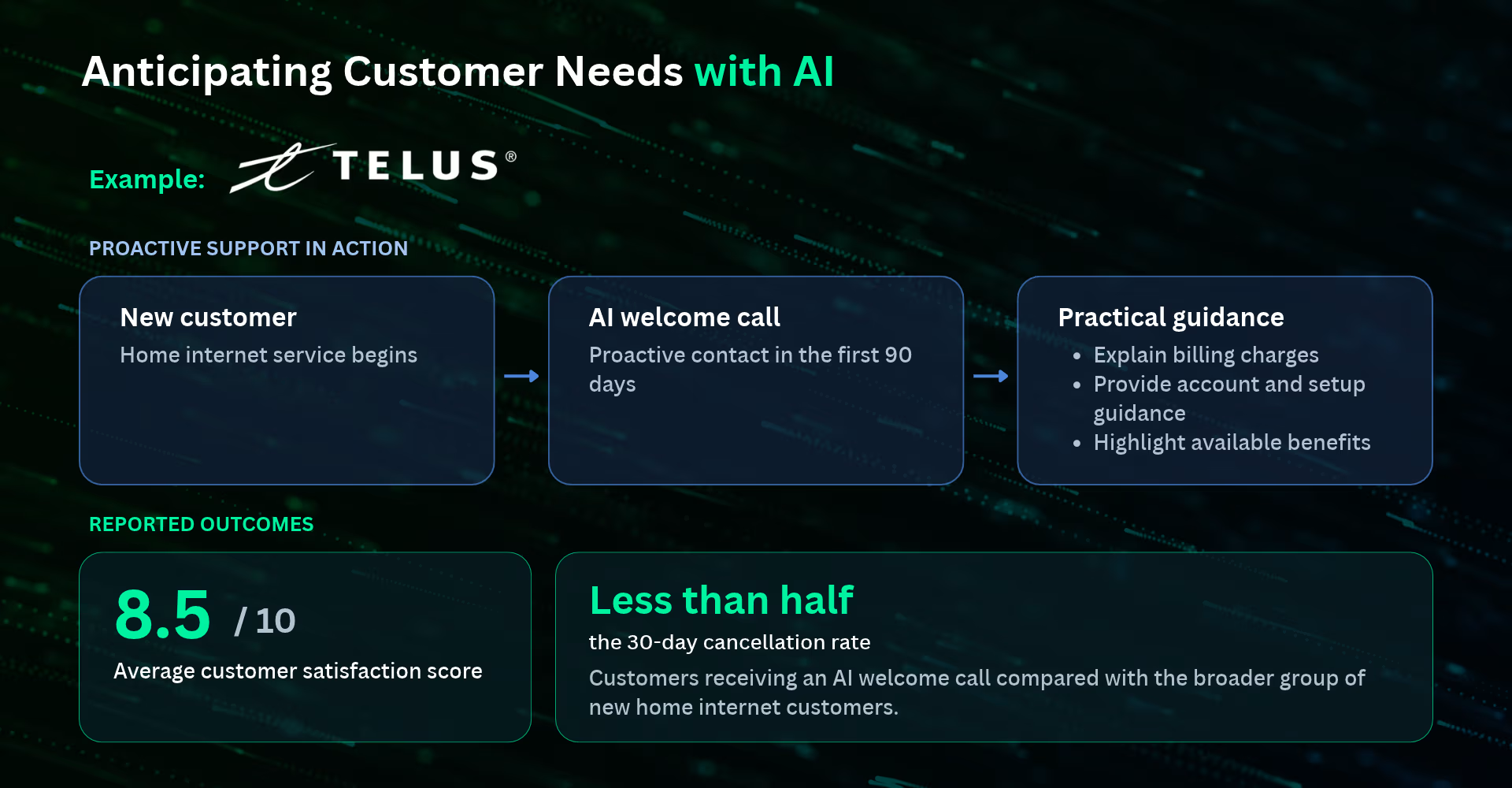
Canadian telecom operator TELUS provides an interesting example. Through a collaboration with TELUS Digital, the company introduced an AI-powered voice agent to contact new home internet customers during their first 90 days.
The initiative addressed common onboarding problems, including confusion over first bills, difficulties setting up services, and limited awareness of self-service tools. Rather than waiting for customers to call support, the AI voice agent proactively contacted them to explain billing charges, provide account guidance, and highlight available benefits.
According to TELUS Digital's case study, the AI voice agent achieved an average customer satisfaction score of 8.5 out of 10. Customers who received an AI welcome call also had a 30-day cancellation rate that was less than half that of the broader new internet customer group.
This example shows how AI can do more than automate customer support. By identifying common customer pain points and addressing them early, operators can prevent frustration, improve onboarding, and build stronger relationships from the beginning.
AI can also help customer service agents summarize previous interactions, find relevant information, and suggest solutions. However, technology alone will not solve every CX problem. Poor data quality, fragmented systems, and unclear processes can undermine even sophisticated AI applications. Customer privacy and responsible data use must also remain priorities.
6. Measure CX by Its Business Impact
Customer satisfaction scores are useful, but they do not tell the whole story. To make CX a revenue strategy, connect customer experience measures to commercial performance.
Consider tracking these indicators together:
Examine these measures by customer segment and journey. Improved onboarding, for example, may increase activation rates, while better complaint handling may have a greater effect on retention.
Where possible, compare results against a baseline or a comparable customer group. This helps distinguish the impact of CX improvements from changes caused by pricing, promotions, or seasonality.
When CX teams work closely with marketing, sales, operations, and technology, they can identify which improvements create the greatest value and direct investment accordingly.
Make Customer Experience a Growth Driver
The telecom industry will continue to compete on coverage, speed, pricing, and innovation. But these advantages are not always enough to build lasting customer relationships.
The providers that stand out will make it easier for customers to get what they need, resolve problems quickly, and discover services that genuinely fit their lives.
You do not need to transform every interaction overnight. Start with the journeys that cause the most frustration. Use data to understand customer needs, simplify digital experiences, and resolve problems before they escalate. Then measure whether those changes improve retention, revenue, and operating efficiency.
Customer experience is not simply about keeping customers happy. It is about giving them compelling reasons to stay, engage, and spend more with you.
Turn Better Customer Experiences into Business Growth
Delivering a consistent, personalized customer experience requires the right combination of technology, data, and operational processes. Connecting these elements can help telecom providers simplify customer journeys, improve engagement, and create new growth opportunities.
At Circles, we help telecom businesses accelerate digital transformation and build more agile, customer-centric operations. Contact our team to discuss how you can improve customer experience and unlock new revenue opportunities.